Steve Nallon offers a variety of talks on movie history, film genres, and cinematic techniques. Steve’s specific lectures on film genre are ‘The Haunted House Movie’; ‘Film Noir’; ‘The Animation Movie’; ‘Destination Time Travel: A Journey in Film and Television’; ‘The Gangster Movie’; and ‘The Action Movie’. His talks on cinematic topics cover ‘Cinema About Cinema’; ‘Cinema About Television’; and ‘The Hollywood Formula’, which offers a detailed analysis of film story structure.








For each of the talks, Steve takes a key film as a focal example to explore the nature of that particular movie genre or subject:
‘Film Noir’: WHO FRAMED ROGER RABBIT
‘The Haunted House Movie’: THE CHANGELING
‘The Animation Genre’: Disney’s HERCULES
‘Destination Time Travel: A Journey in Film and Television’: BACK TO THE FUTURE
‘The Gangster Movie’: THE GODFATHER Trilogy
‘Cinema About Cinema’: THE PURPLE ROSE OF CAIRO
‘Cinema About Television’: PLEASANTVILLE
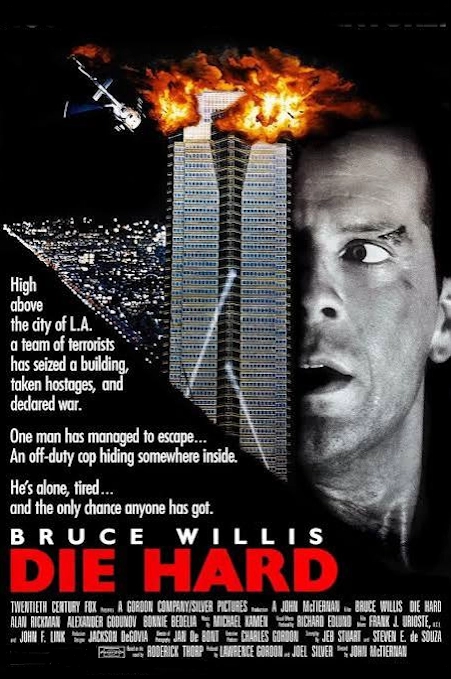
‘The Action Movie’: DIE HARD
Each genre may be different, but all stories have a focus – and in essence, genre is about how that central theme or idea is visually and narratively expressed.
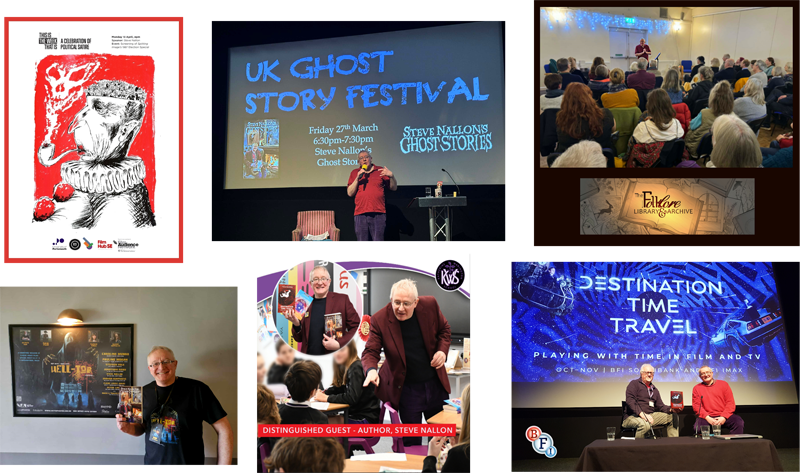
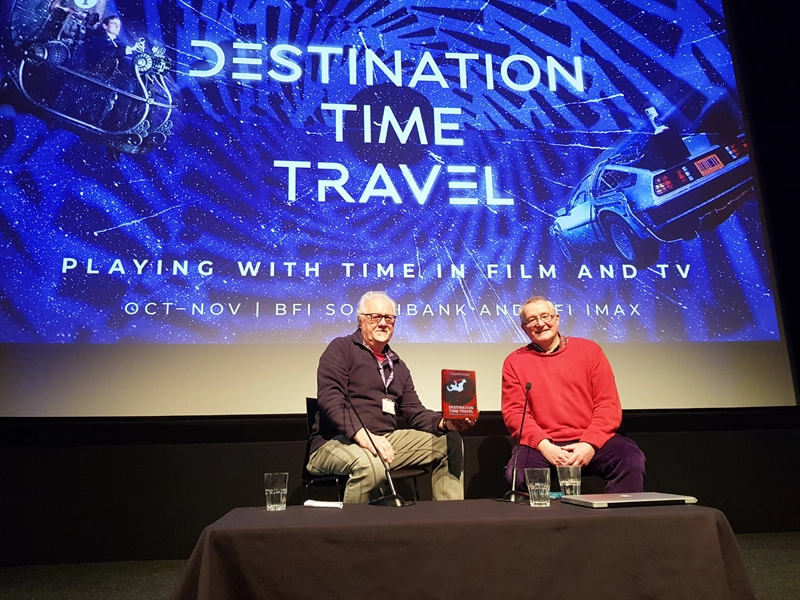
The talks Steve gives on movie genre are based on the lectures he wrote for the interdisciplinary module on Film Studies at the University of Birmingham and his published writings in books and periodicals such as THE NEW STATESMAN, CLASSIC MONSTERS OF THE MOVIES, SCRIPTWRITER, MUSICAL STAGES, and THE ILLUSTRATED ENCYCLOPEDIA OF MUSIC. Steve’s time travel lecture is based on the keynote presentation he gave at the British Film Institute to introduce their ‘Destination Time Travel’ season.
In recent years, Steve’s insights into these film genres and movie topics have proved very popular with cultural groups, societies, and festivals. His friendly and relaxed approach makes Steve’s lectures highly engaging, and his use of everyday language rather than academic jargon means his talks are always accessible to a wide audience.

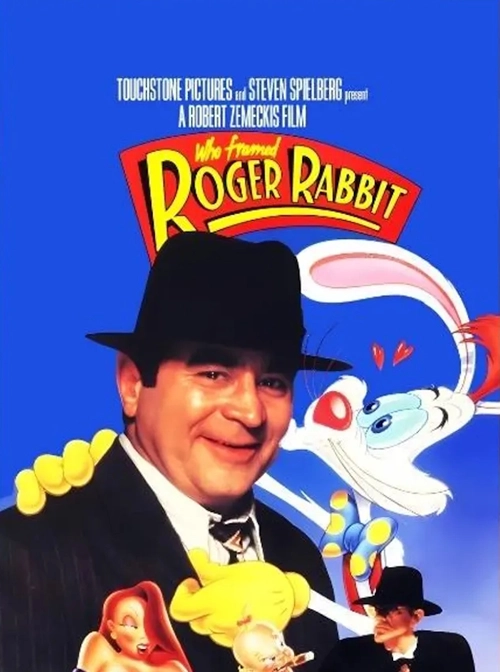
The talk Steve Nallon gives on film noir with WHO FRAMED ROGER RABBIT as the focal example looks at the history of the film noir genre, its themes, story tropes and visual motifs. Steve’s choice of WHO FRAMED ROGER RABBIT might seem an odd one, but it is a movie that intentionally uses the stylistic and narrative conventions of film noir in a very knowing manner. In fact, WHO FRAMED ROGER RABBIT cleverly combines two established genres, film noir and animation, creating a unique movie that in some ways is about the very nature of these seemingly conflicting genres.
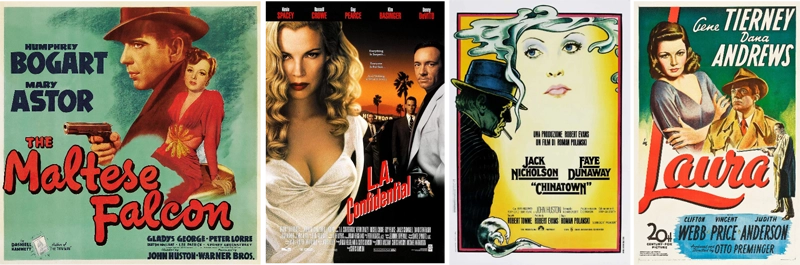
The lecture begins by looking at classification and categories, and how certain audience expectations become established by genre terms. What this means is that when you go to see a genre movie you are familiar with – be it an action movie, a gangster movie, or whatever – you will have in your head a checklist of sorts of what to expect. For film noir, you’d anticipate that there will be a femme fatale of dubious intent, an anti-hero (often a detective in a felt fedora), plus some sort of investigation into a crime with greed as a theme. Visually you’d expect black and white photography, high contrast chiaroscuro lighting, Venetian blinds casting entrapping shadows, a nighttime urban environment, and all with a voice-over narration. With these tropes and motifs in mind, the talk then offers photographic examples from classic film noirs such as LAURA, THE MALTESE FALCON, THE BIG SLEEP and FAREWELL, MY LOVELY, as well as recent variations of the genre in movies, including LA CONFIDENTIAL, SEVEN, CHINATOWN and NIGHTMARE ALLEY.
Steve next considers some of the features and elements of the animation genre, including the unreality of the cartoon world, use of primary colours, visual gags and silly jokes, the unchanging nature of a ‘toon’, and the knowingness of cartoon characters. An example of this latter characteristic can be found in WHO FRAMED ROGER RABBIT, where Roger says he had to wait until a moment when it was funny before removing his hand from the handcuffs attached to Eddie. Other instances and illustrations are offered in Steve’s talk, and these come mainly from the Warner ‘Loony Tunes’, especially DUCK AMUCK. The lecture then asks to what extent the seemingly conflicting genres of animation and film noir can co-exist. Ironically, the talk suggests, it may be that it’s the very artistry and aesthetic at the centre of each genre that allows for the combination.
WHO FRAMED ROGER RABBIT makes references throughout to classic Hollywood movies, including, in the climactic scene, a famous line from THE WIZARD OF OZ (“I’m melting! Melting!”). The lecture then considers the use of homage in cinema, or, to use the jargon, ‘intertextual referencing’ where ‘text’ refers to a movie. There is a look as well at the many nods to other movies in WHO FRAMED ROGER RABBIT, and the talk concludes by listing the numerous homages made to that most-homaged of film classics, namely THE WIZARD OF OZ.

The talk Steve Nallon gives on the gangster movie, with THE GODFATHER Trilogy as the focal example, covers the history of the genre, concentrating on its characters, its narrative tropes, and its origins, which were born out of the contemporary social issues of the 1920s and 1930s.
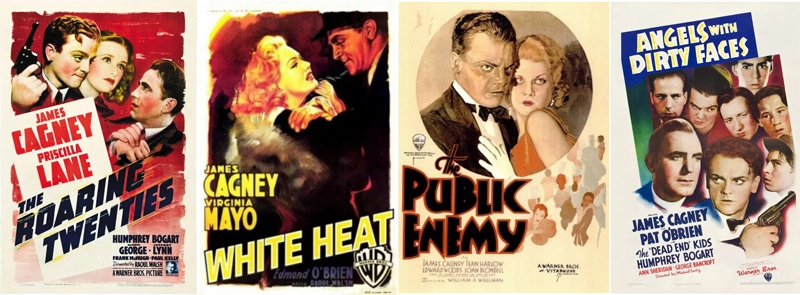
The lecture begins by examining the various story patterns traditionally associated with the gangster movie genre. These include the rise-and-fall plot (PUBLIC ENEMY, THE KRAYS); the undercover-cop-in-gang plot (DONNIE BRASCO, POINT BREAK, WHITE HEAT, THE DEPARTED); the going-straight narrative (THE ROARING TWENTIES, THE TOWN, THE UNFORGIVABLE, and, to a degree, GOOD FELLAS); the ‘Blood-Brothers’ fable (ANGELS WITH DIRTY FACES); and the head-to-head conflict on the theme of good-versus-evil (THE UNTOUCHABLES, HEAT). The talk then examines the conventional portrayal of the gangster, including the flawed hero of THE ROARING TWENTIES, the Oedipal psychotic at the centre of WHITE HEAT, the ambitious overreacher in PUBLIC ENEMY, and the institutionally corrupted protagonist in ANGELS WITH DIRTY FACES. The talk notes that all four of the gangster personas in these movies were played by Jimmy Cagney, the defining character actor of the 30s and 40s movie mobster.
The lecture then moves on to examine the nature of the downfall of the gangster hero, and, in so doing, considers the coded warning in gangster movies throughout the 30s, 40s and 50s that crime most certainly doesn’t pay. There’s an examination as well of the ethos of the gangster. The talk points out that the ‘shoot out’ scene at the end of any gangster movie has few, if any, codes of conduct, whereas in the traditional Western genre, the final ‘duel’ has carefully applied rules of conduct as the two men make their approach to draw and shoot. The talk then moves on to investigate the more modern approach to the gangster movie, where the killer is the hero and where American Dream aspirations are expressed and fulfilled by ruthlessness and murder – for example in AMERICAN GANGSTER and GOODFELLAS.
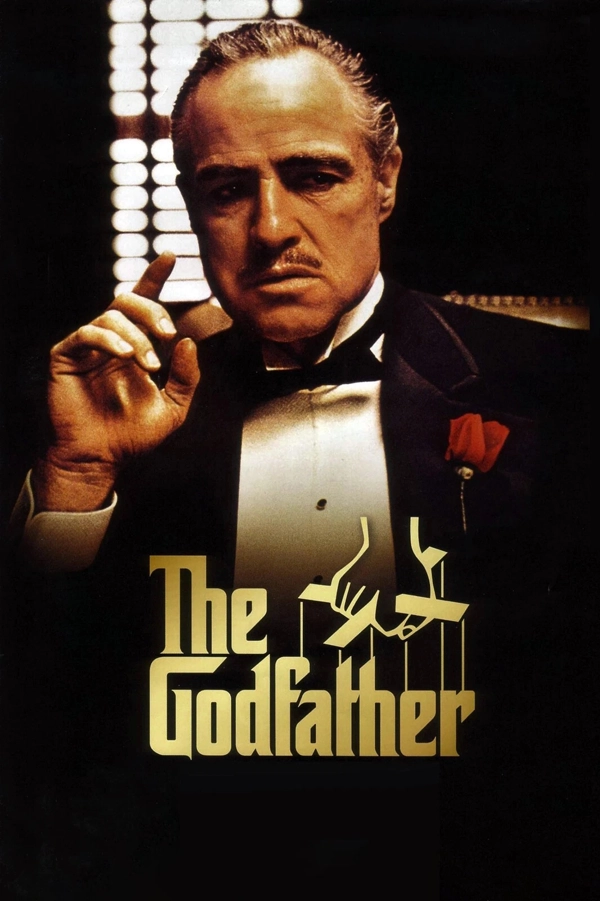
Having established an overview of the genre, Steve’s lecture then asks, ‘How does THE GODFATHER fit in – or not fit in – to these parameters?’ To answer this, the talk first looks at the world of the Mafia and the portrayal of the ‘Don’ in THE GODFATHER, and compares them to the gangster worlds and protagonists of the past. The lecture suggests that it’s the personal ethos of Don Corleone, who makes decisions based on his own traditional moral codes, that fundamentally changed the nature of the gangster movie genre. The talk then argues that the conventional ‘downfall’ narrative of the gangster hero has been replaced in THE GODFATHER with a more complex ‘Faust’-like story pattern, where it’s the drive for power and success that corrupts and destroys a man’s soul. THE GODFATHER aims to be, as the director Francis Coppola himself made clear, a modern myth of a family dynasty, and more specifically the myth of kingship and succession — “a king who had three sons”, as Coppola put it. Furthermore, THE GODFATHER acts both as a metaphor for capitalism and as a critique of the dark nature of the American Dream.
The talk then moves on to look at the stylistic presentation of THE GODFATHER, contrasting the traditional documentary greys and the découpage classique editing style of the 1930s gangster movie with the cinematic art house style that became the hallmark of THE GODFATHER series. Notably, these are the Rembrandt-style source lighting of Gordon Willis and the Eisenstein-style cross editing which can be seen, for example, in the famous baptism sequence.
The lecture concludes by developing the argument that THE GODFATHER can be viewed as a true tragedy in the Greek theatre tradition. The lecture compares one of the main themes of THE GODFATHER with that of Greek drama, namely private vengeance versus public justice. Also developed here is the idea of kataskaphe, a key concept in Greek tragedy, meaning the razing of a dynasty – a concept that is certainly a major theme in THE GODFATHER Trilogy. The talk looks too at the Greek concept of philos, a bond of blood-line proportions that is discussed by Aristotle in his POETICS, and at the idea of hamartia, arguing that Michael Corleone is not a ‘flawed’ character in the modern sense, but rather one whose ‘error’ or hamartia was to ignore ‘the will of the gods’ by going against his historical traditions, particularly in his choice of wife and in the killing of his own brother.

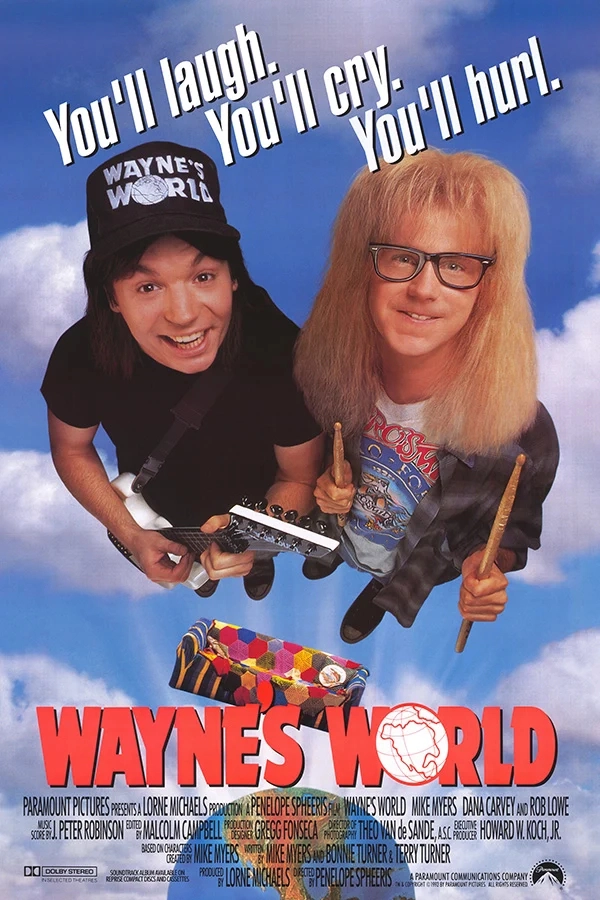
Steve Nallon’s talk begins with the pretty obvious question: ‘Why on earth choose WAYNE’S WORLD as an example of Post-modernism in cinema? Has he never seen SYNECDOCHE, NEW YORK or even FIGHT CLUB?’ Steve answers this by pointing out that Post-modernism incorporates an attitude that is fundamentally anti-narrative, in that Post-modernism has a philosophy which believes very little in the world makes sense or has any real purpose or structure. And it’s this anti-narrative aspect of Post-modernism that is the prime focus of the lecture. It’s true that WAYNE’S WORLD is hardly an example of serious film-making – it’s no Bergman, for sure – and a film with more artistic merit could have been chosen, especially one with an ‘Art House’ or even ‘Indie’ or ‘Underground’ tag. Yet WAYNE’S WORLD’s toying with its narrative boundaries and its awareness of itself as a movie are both key elements of the Post-modernist vibe. Further, it celebrates the ‘low culture’ of television, the most disposable medium of popular culture, which is another aspect of Post-modernism. And so it is for all these reasons that WAYNE’S WORLD makes a perfect ‘text’ for any study of Post-modernism. Or “Not!”, as Wayne and Garth might have added.
Before considering the specific nature of the anti-narrative, Steve’s talk takes a wider look at the concept of what exactly Post-modernism is. Of course, to address this you first have to ask what ‘Modernism’ is. Or was. And so the lecture takes a brief hop, skip, and jump through the history of Modernism, from its roots in the Age of Reason and the Enlightenment (Kant, Locke and other clever clogs), to the emergence and influence of the Industrial Revolution, culminating in the calamity of the First World War. The talk suggests that the Age of Reason, in putting mankind’s capacity to reason above all other aspects of existence, ultimately failed in its goal of understanding mankind itself, for those who followed in its footsteps created the -ism that led to doubt, confusion and a nihilistic view of life. In a nutshell, the great political thinkers, psychologists, anthropologists and scientists of the nineteenth and twentieth centuries, such as Karl Marx, Sigmund Freud, Charles Darwin, Sir James Frazer and Albert Einstein, who relentlessly pursued humanity’s freedom to reason further than anyone else had ever done, ended up demonstrating that mankind isn’t actually free to reason at all. Worse, the individual is ultimately unknowable to himself and his life has no purpose in our determinist world. A person’s intentions and actions (from Freud) were shown to be unconscious and unwitting; one’s social and commercial role in society (from Marx) was governed and controlled by the political system we call Capitalism; one’s sacred beliefs and immutable truths (from Frazer) were discovered to be merely relative and arguably no more true than any of the other religions across the world, and mankind’s place and role in the biological history of our planet (from Darwin) were proved to be merely part of an ongoing evolutionary process. And to top it all, a madman could at any moment press a button and blow us all up with a big bomb. Thank you, Einstein. In short, we have no control over ourselves, our social position, or our purpose in the universe. As a result of all that smarty pants reasoning, the individual was now alienated from his own mind, society, and God. For, as another bright spark put it, “God is dead.” Man then became a stranger to himself, living in a meaningless and purposeless universe, where failure and futility were supreme. Cheerful stuff, Modernism.
But Modernism, of course, wasn’t just a philosophy; it was also a creative and artistic movement. And one of its key features was its reaction against the prevailing ‘Realist’ tradition. Put simply, Realism aims to produce the effect of reality, whereas Modernism sets out to present reality as a mere effect, something not really real or true at all. This can be seen in the work of visual artists of Modernism such as Pablo Picasso, Henri Matisse, Georgia O’Keeffe, and Jackson Pollock, but it is also present in its literature (just compare Virginia Woolf to Jane Austen or Samuel Beckett to Bernard Shaw). To a lesser degree, this sense of what is unreal being more true than what is thought to be real is there too in cinema (think here of Jean-Luc Godard and Luis Buñuel). It should be said that the leading Modernist figures in the creative world were a pretty exclusive bunch, very much aware of their own artistic merit and sometimes unwilling to let any old painter or writer into their elite circle of artistic expression. A snobby lot, on the whole.
Another key element of the Modernist movement was its deliberate attempt to be ‘modern’ – to go out of its way just to be new. The lecture briefly discusses the movie CITIZEN KANE in this context. For example, new cinematic techniques of representation are used in the film, though some critics argue they are gimmicky and showy. ‘Pretentious’ is a word occasionally used about CITIZEN KANE. Yet on a philosophical level, a key Modernist point the film makes is that no person can ever truly be known or knowable – and certainly not by just a word, “Rosebud”, spoken on a deathbed.
With all this in mind, the talk then considers the ethos and thinking at the heart of WAYNE’S WORLD and compares them to those of Modernism. Far from being a world of alienation, WAYNE’S WORLD is essentially a ‘Buddy-Buddy-Bromance’ movie. No one is completely unknowable with a mate – or better still, a Babe! Furthermore, the creative artists in WAYNE’S WORLD are not from an elite, they are suburban males in a basement, producing television for anyone who wants to watch it. ‘Yes,’ the movie seems to be saying, ‘the medium of the movie that we are in isn’t real (what is?), but what the hell, “Live in the now!” and enjoy its unreality instead of undermining its possibilities!’ Post-modernism’s message in WAYNE’S WORLD seems to be that Modernism should just get cool! Except it can’t – “Yeah, and monkeys might fly out of my butt!”
The lecture then moves on to take a closer look at what ‘Post-modernism’ is said to be. The term was first coined in the 1960s and has been seen by some to be the key cultural term that sums up the period from the 60s right through to the early 1990s. As with Modernism, Post-modernism has many meanings and applications – Damien Hirst, BIG BROTHER, and Graham Norton have all been described as ‘Post-modern’. In cinema, films such as PULP FICTION, BLUE, THE PLAYER, SWINGERS, CLERKS, MY OWN PRIVATE IDAHO, MOULIN ROUGE, and RESERVOIR DOGS have all been given the ‘Post-modern’ tag. It’s a pluralistic rainbow term that is inclusive in its nature and usage, and so is not as easily confined or defined as Modernism is. That said, a key feature of Post-modernism is a reluctance to distinguish between high and low art. It makes no distinctions between Bartok and Girls Aloud or EASTENDERS and DER ROSENKAVALIER. In this context, the WAYNE’S WORLD arena is operating in – hierarchically speaking – the ‘lowest’ of all media output: cable television. The talk then takes the opportunity to compare other films of recent years that have taken the medium of television as their focus. Few movies, in fact, celebrate television. Consider, for example, films such as BROADCAST NEWS, QUIZ SHOW, WAG THE DOG, TO DIE FOR, and KING OF COMEDY. WAYNE’S WORLD, though, unashamedly says television is fun and is good for you.
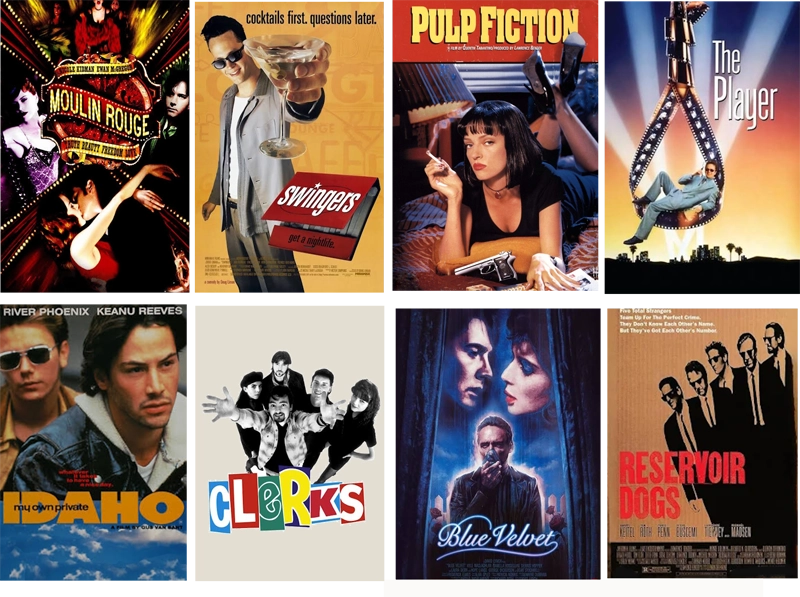
Steve’s talk then introduces two key aspects of the postmodern narrative technique, which are known in film studies jargon as ‘intertextuality’ and ‘metatextuality’. Intertextuality simply means referencing other movies or texts. Many movies of the 1990s did this, for example SWINGERS with GOODFELLAS, and MY OWN PRIVATE IDAHO with both Shakespeare’s HENRY IV and THE WIZARD OF OZ. WAYNE’S WORLD references TERMINATOR II (“Have you seen this boy?”), as well as PSYCHO and MISSION IMPOSSIBLE. Metatextuality means basically making the audience aware it is watching a film. This concept goes right back to Aristophanes with the first Greek comedies. It is also found in the early development of the novel (TRISTRAM SHANDY) and in 70s and 60s movies such as MONTY PYTHON AND THE HOLY GRAIL and WEEKEND. In WAYNE’S WORLD it is found in the subtitles (in WAYNE’S WORLD II it is bad dubbing) and in various self-conscious camera moves.
An important aspect of Post-modernism, then, seems to be the idea that since all narratives have already been told, and we have an awareness of what narrative is, why not mix up the story we want to tell with other stories and at the same time have fun making the audience aware that it is being presented with something we made up? In this respect, WAYNE’S WORLD II expects its audience not only to grasp the allusions to BATMAN and THE GRADUATE, but also to recognise the references to story theory itself – for example, when the characters talk about how a certain event in the story will ‘pay-off’ later in the movie. There are as well in the movie discussions about the nature of the ‘Herald’ and the ‘Mentor’, both terms used by well-known Hollywood story gurus who borrowed story theory ideas from studies of mythology (anthropologist Joseph Campbell) and archetypes (psychologist Carl Jung). While on that subject, Steve takes a moment or two in the talk to consider the archetypes of Wayne and Garth, suggesting that Wayne is created in the ‘Trickster’ mould, whereas Garth is the ‘Puer Aeternus, the eternal boy or innocent abroad. The Trickster is a destabilizer at odds with order and, in the context of Post-modernism, at variance with the very concept of ‘The Grand Narrative’, which was a pre-modernist view of the story world. The Trickster is also a comic force of reduction, attacking order, levelling people and cultural ideals, and bringing everything down to his lower level. However, subversion, destabilization, and attacking those in authority have been around for centuries in drama and literature; therefore, the lecture now asks, ‘What is different about the Post-modern perspective?’
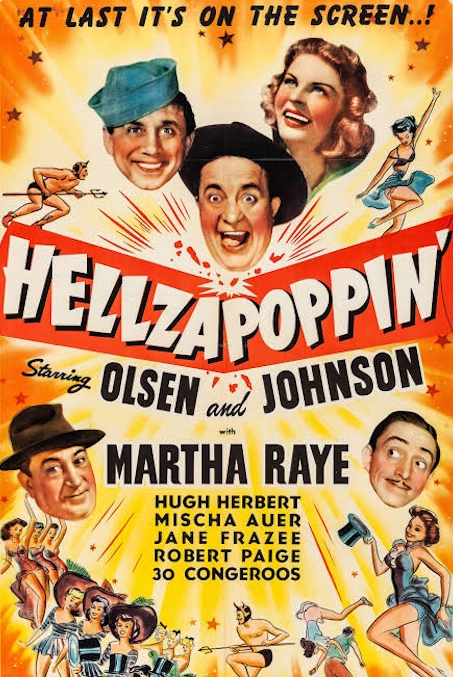
Steve’s lecture next considers various arguments for and against Post-modernism (the ‘posties’ versus the ‘anti-posties’). This is seen in the context of the seemingly eternal battle between those who only celebrate the new and the modern, and those who only revere the classics and established traditions (Swift’s TALE OF A TUB from the late 1690s is an example of this endless argument). The lecture ends with a brief look at HELLZAPOPPIN’, the WAYNE’S WORLD of its day, and then asks ‘Will future generations be as bemused at the antics of WAYNE’S WORLD as most contemporary audiences are with the goings on in HELLZAPOPPIN’?’ Will the gags of the 1990s Post-modernists be making people laugh in the 2050s? Well, the talk ends by saying, even if WAYNE’S WORLD doesn’t last, it was fun while it lasted. “Party Time! Excellent!”

The talk Steve Nallon gives on the action movie genre (with DIE HARD as the focal example) covers the appeal of the genre, its history, the psychology of the audience when watching an action movie, the nature of the hero, the setting and arena of the tale, the strategic nature of the plotting, and the genre’s political and social undertones. Steve’s lecture argues that the action movie is a genre largely ignored by academics, generally undervalued by critics, and often even scorned by those who work in the film industry. However, it has proved to be the most commercially successful genre in movie history and, when done well, is one of the few genres that will guarantee a packed audience of the paying public. Indeed, for many, it is the only genre that will get them to leave their house and go to a cinema (Steven Spielberg is said to have told Tom Cruise that TOP GUN: MAVERICK “saved Hollywood’s ass” and might have also “saved the entire theatrical industry”). Yet the talk argues that, despite the commercial rewards of the action movie, it is still one of the most difficult genres to write and make work.
The lecture begins by asking ‘What is meant by “action”?’ and traces the idea and its dramatic usage right back to Aristotle and his POETICS. The talk then takes various concepts of what we call action, such as purpose, desire, plan, project and plot, and argues that clarity in the action line, and how it is manifested in a physical and strategic manner, is essential to the success of any action movie. And in tandem with this goes the ability to create a situation in which that action drive can be developed in an imaginative and original way.
The lecture then moves on to ask, ‘What is the special appeal of the action genre?’ Here the talk looks at the verisimilitude of cinema compared with other media such as the novel, stage, and radio, and suggests that creating what at least looks like actuality is a key aspect of the genre. The talk also examines the pleasure of plot, proposing that the action genre, as with the caper movie and the whodunnit, puts much emphasis on the strategy of the plot, especially its twists and reveals. It is in this sense that the creativity of the action movie is so much underrated and undervalued by academics, critics, and even industry professionals. The talk considers, too, the importance of the ‘rooting interest’ and the empathetic sense of danger that is experienced when watching an action movie. The physiology and psychology of the audience is, the talk argues, one of the key elements that is often overlooked when considering the genre. Far more active involvement is going on than is traditionally proposed.
The lecture next looks at the action genre in the context of ‘shame culture’, an anthropological term defining a way of thinking that puts great emphasis on the importance of doing the right thing based on the shame you would feel if you didn’t. The lecture points out that the lone hero in the Western – the ultimate ‘shame culture’ movie genre, where “A man’s gotta do what a man’s gotta do” – has certain similarities with the action movie and, to some degree, the action movie developed from that genre.
With all these thoughts in mind, the talk takes a detailed look at what many regard as the greatest of all action movies, namely, the first DIE HARD picture. It examines the movie’s strategic action, its audience appeal, and the protagonist’s connection to the traditional anti-hero found in the Western. Nor does the talk forget the movie’s humour. There’s a look, as well, at the social context of the 1980s with regard to DIE HARD. The talk considers, for example, the perceived threat to masculinity inherent in several notable 1980s movies, such as FATAL ATTRACTION, FIRST BLOOD, and THE WAR OF THE ROSES. John McClane in DIE HARD is estranged from his wife, who has taken a lucrative job where she is second in command of a multinational company, and so he is facing a life of loss without a defined domestic role. The movie also taps into the sense of loss of standing in America at the time, and indeed in Hollywood itself, where Japanese tech companies such as Sony were aggressively buying up and taking over film studios. The tower building in DIE HARD, it should be noted, may be in LA, but it is owned by Japan. Not only that, but the gang with all the know-how are German, and they easily manage to outwit the FBI agents. Furthermore, the Everyman characters, John McClane and Sergeant Al Powell (who in America doesn’t know a guy named Al?) are ignored and sidelined by the powers that be. It is in this context that the talk suggest that below the surface of the explosive action and the strategies and counter-strategies lie complex social, psychological and political subtexts – and it is these undercurrents that make DIE HARD such a quintessentially 1980s movie from a twenty-first century perspective.
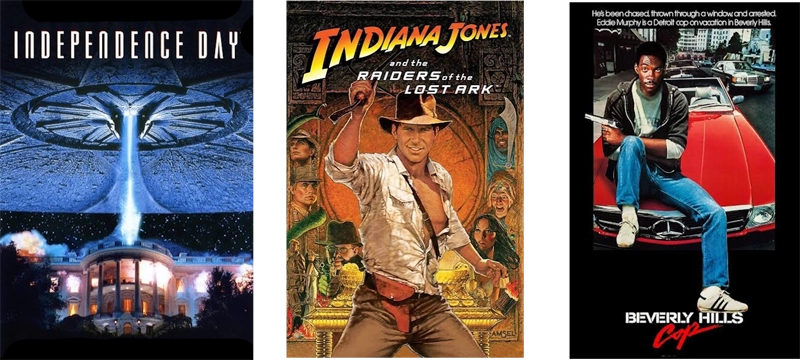
The next section of the lecture examines in detail some of the creative issues in developing and writing an action movie screenplay. One problem is giving the hero depth of character. That said, there is perhaps a larger range of heroes in the action movie genre than you might at first imagine. These include the anti-hero (MAD MAX, ESCAPE FROM NEW YORK); the rogue hero (LETHAL WEAPON, DIRTY HARRY, TOP GUN, and the recent sequel TOP GUN: MAVERICK); the comedy/trickster hero (BEVERLY HILLS COP, PIRATES OF THE CARIBBEAN); and the travelling angel hero (THE EQUALIZER, FISTFUL OF DOLLARS). The lecture suggests that John McClane is a rich combination of all these different types of hero, which in part explains his iconic appeal. Another issue is the justification for what the hero does, which in screenwriting is known as the ‘warrant for action’, meaning, in the context of an action movie, the use of violence as a justifiable force in the event of some sort of threat or attack. With regard to this point, the lecture looks at the issue of buildings being blown up in action movies following the events of 9/11. The talk points out that the genre, perhaps wanting to avoid the politics and ramifications of actual real-life terrorism, turned to sci-fi and alien invasions as the primary warrant for action. That said, contemporary social and political undertones can still be found in the action movie, notably in WAR OF THE WORLDS and INDEPENDENCE DAY.
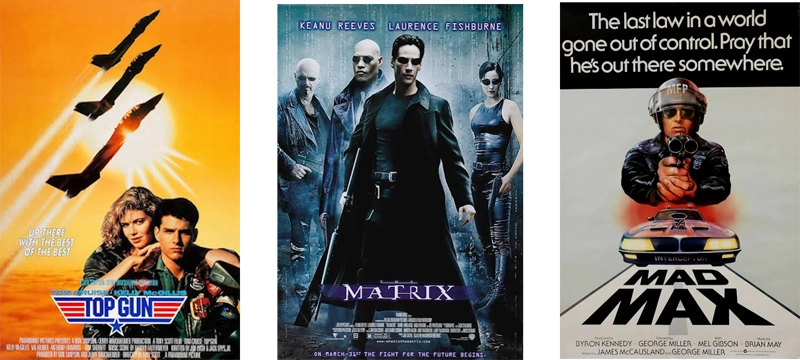
The lecture next examines the ‘arena of conflict’ in an action movie, meaning both the setting and the nature of the forces of antagonism. Some action movies involve a moving arena (RAIDERS OF THE LOST ARK, STAR WARS); in others, the arena is completely enclosed and sometimes contracting (AIRPORT, TOWERING INFERNO, POSEIDON ADVENTURE). Similarly, the forces of antagonism can be singular (THE TERMINATOR, PREDATOR) or multiple (THE MATRIX). DIE HARD, the lecture points out, has a changing arena, but also one that is enclosed. And again, the psychology of the audience is addressed here, with special consideration of the fear of enclosed spaces and natural resistance to the unnatural experience of flying or diving. Then, there are the multiple forces of antagonism, where conflict comes not just from the gang and the building’s environment, but also from those who should be on your side – namely the FBI.
The lecture then moves on to consider one of the most misunderstood aspects of the action genre, specifically the conflict of the forces of opposition. The talk argues that, in the action genre, the ‘protagonist’ is not necessarily the ‘hero’. Strictly speaking, the protagonist is the one with the initial action-plan, whereas it is the antagonist who comes up with the counter-action. In DIE HARD, the villain is, therefore, the ‘protagonist’ and the hero, John McClane, is the ‘antagonist’. And it is both the imaginative strategy of the protagonist-villain (it is a quite brilliant plan with a great twist) and the inventive countering of that plan by the antagonist-hero (“Now I have a machine gun. Ho-ho-ho!”) that give so much dramatic pleasure in the movie. Related to all this physical and psychological plotting is the fact that it is based on a comprehensive understanding of the principles and stratagems of warfare. One particular aspect worth mentioning here is the stratagem of jungle warfare. The film-makers knowingly created DIE HARD as a ‘jungle picture’, in the sense that the world of the urban building, unfinished and still under construction, often takes on the appearance of an obstacle-laden jungle environment.
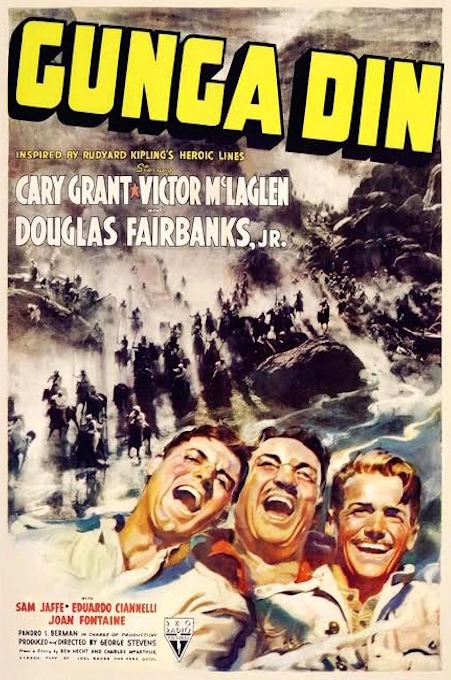
Next, the lecture traces the history of the action genre back to the early Westerns, but argues that the first recognisable ‘action movie’ was GUNGA DIN in 1939. The talk illustrates how, in the action genre, certain compulsory scenes have become a necessary feature. These include an initial non-violent confrontation between villain and hero, and later the perilous situation when the hero is at the mercy of the villain – with the reversal that the hero, through ingenuity, ultimately triumphs. Such scenes can be found in a whole array of action movies, including CON AIR, RAIDERS OF THE LOST ARK, HEAT, TRUE LIES, JEWEL IN THE NILE, and, most notably, the 007 Bond franchise.There are also action movies such as BLADE RUNNER where the boundaries of hero and villain are somewhat blurred, resulting in scenes that are subverted and ambiguous.
The final section of the talk anticipates the changes and developments that might be possible in the action movie genre in the future. More female ‘heroes’ of the action movie could emerge, encouraged by movies such as ALIEN and LARA CROFT. Satire and comedy may also become a means of developing the genre, as might animation. Despite the action movie being seen as violent, it is interesting to note the number of heroes in the genre who transcend or eschew violence, as seen in films like BLADE RUNNER, HACKSAW RIDGE, THE FUGITIVE, MULAN, PRINCESS BRIDE, and even STAR WARS. The irony of the action genre is that its future may lie in a value system where non-violence becomes the primary means of overcoming an initially violent action – or not, as the case may be.

Steve Nallon in this talk on cinema about cinema looks at those movies that are about movies and, more specifically, those movies about the experience of watching a movie. The focal example in the lecture being Woody Allen’s THE PURPLE ROSE OF CAIRO.
The talk begins by exploring what makes the cinema experience so different from watching television, reading fiction, or visiting the theatre. For example, there’s the importance of the saccadic movement of the eye and its relationship to the size of the screen. The point here is that saccadic movement stimulates the brain, and so looking at a large cinema screen will result in far more saccadic movement (and therefore brain stimulation) than will a relatively small television screen. The lecture also considers other issues such as physical space, opportunity to view, cinema as a social event, and so on.
The talk then moves on to dispute the idea that ‘a suspension of disbelief’ is central to watching a film. Instead, Steve suggests that several other factors are far more important to the cinematic experience. These include complete immersion, identification, cinematic literateness, aesthetic response, the ongoing process of understanding a film after leaving the theatre, and the psychological theory of suture – the idea that the viewer ‘stitches’ themselves into the movie structure.
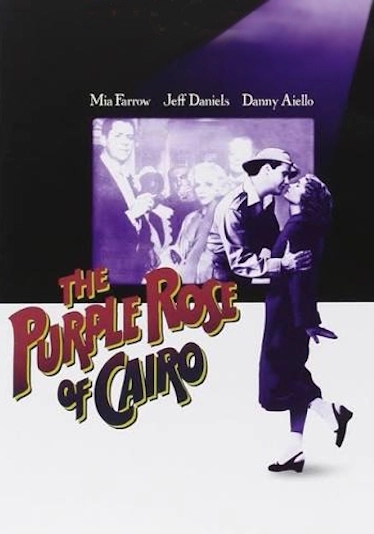
The lecture then begins to outline how Woody Allen’s 1985 movie THE PURPLE ROSE OF CAIRO presents this complicated world of the cinematic experience in fantasy form. It also examines the nature of escapism (one key thought of the lecture is that you should never mock escapism if you’ve never needed to escape). The talk goes on to compare THE PURPLE ROSE OF CAIRO to several other films about the cinematic experience, such as CINEMA PARADISO, SHERLOCK JR., THE LONG DAY CLOSES, and LAST ACTION HERO. How cinema represents itself is then compared to the way cinema represents other media. The lecture makes the observation that cinema of the past often represented television negatively in such films as NETWORK, WAG THE DOG, and CAPRICORN ONE, whereas in more recent years cinema has presented television in a more positive light, notably in movies such as I SAW THE TV GLOW, SATURDAY NIGHT, and SEPTEMBER 5. The talk suggests that the turning point was perhaps THE TRUMAN SHOW in 1998.
The talk then looks at some of the technical aspects of THE PURPLE ROSE OF CAIRO. In this section, the talk examines how the employment of a different film stock, high-key lighting, and ‘American montage’ editing all help distinguish the ‘cinema world’ from the ‘real world’ in the movie. The lecture concludes by briefly examining the story structure of THE PURPLE ROSE OF CAIRO in terms of a traditional fairy fable.

The talk Steve Nallon gives on animation (with Disney’s HERCULES as the focal example) considers the nature of genre, its cinematic style, and the structure of its narratives. The lecture begins by observing that the animation genre is one that is often defined either by the nature of the form itself, meaning how it is created, or the age group for whom it is created. And with reference to the movies of Disney in particular, that audience is seen as being primarily children. However, the talk takes issue with the idea that ‘cartoons are for kids’. There is, and always has been, the lecture argues, an adult audience for animation. Indeed, there are many jokes and visual motifs in Disney movies that can probably only be understood by adults – and in the case of HERCULES, that would include adults who have had an education in the classics. It should be said as well that there are certain animations, including, for example, FRITZ THE CAT, which are specifically aimed at an exclusively adult audience.

The talk then moves on to consider the idea of the animation genre being one that allows for a classification outside the normal boundaries of genre. Put simply, ‘cartoons’ are defined not by subject matter or narrative tropes, but rather by the physical nature of how they are made. Of course, the cinematic techniques of movie making – such as lighting, mise-en-scene, and editing – have certain associations with particular genres. However, the animation movie goes one further in that it can be singularly classified, at least to some degree, by a specific filmmaking process. Yet, as the talk suggests, what confuses matters is that what is seen as the traditional animated form, that is a series of drawings that appear to move when shot in sequence, is not the only process that could be said to come under the ‘animation’ umbrella. Techniques using pliable models and stop-frame animation cameras, for example, go right back to 1898 and a film (now lost) called THE HUMPTY DUMPTY CIRCUS. Then, there’s JASON AND THE ARGONAUTS and the many films created by Ray Harryhausen, plus the ‘claymation’ style of Aardman Animations (WALLACE & GROMIT, SHAUN THE SHEEP, and CHICKEN RUN), and, more recently, hybrid 3D animation, that is, CGI animation combined with hand-drawn comic book techniques (PUSS IN BOOTS: THE LAST WISH). Strictly speaking, Aardman Studios uses what you might call a ‘plasticine aesthetic’, in that it is a working method that relies on a specialised, non-drying, wax-based clay that holds its shape under hot studio lights. But the bigger question with all this is: should the method by which a film is made define an entire genre? And is it that useful to lump all animation under the same heading?
To illustrate this issue, the talk makes a comparison between Disney’s BEAUTY AND THE BEAST and MGM’s TOM AND JERRY. Clearly, both are cartoons, but with BEAUTY AND THE BEAST what you have is a single narrative telling a complete story that has an irreversible end (the spell is broken and the beast becomes human again). On the other hand, with MGM’s TOM AND JERRY series there are numerous stories with episodes in which, although the status quo may alter, neither Tom nor Jerry fundamentally change from story to story in any irreversible way.
Also, it should be said that the world rules of TOM AND JERRY are very different from those of BEAUTY AND THE BEAST. Yes, both are ‘unreal’ in the sense that neither recreates our naturalistic world, yet each does create its own consistent reality and style. The characters of Tom and Jerry often change shape from one mode of being to another – for example, into an anvil when hit by an anvil. This change of physical form is merely in the moment and, in a second or so, it is easily – and often literally – shaken off. The world of BEAUTY AND THE BEAST does not go that far. Disney characters tend to maintain the general nature of their core anatomy even when squashed and stretched. Indeed, historically there have been numerous differences in style and presentation of ‘reality’ across the various animation production studios.
The talk moves on to suggest that perhaps a better approach to looking at the animation genre would be to consider its narrative structure and the rules of its story world. With this in mind, the lecture takes a moment to briefly analyse the traditional narrative form of classical storytelling structure – including objective narrative, protagonist-antagonist, unity of action, use of a deadline, linear time sequence, causality, irreversible change, and closed endings. The lecture offers examples from numerous Disney animations, noting ironically that the live-action adventure movie GEORGE OF THE JUNGLE is far more subversive when it comes to the traditional narrative storytelling than are most Disney animations.
Next, the talk considers how the animation genre borrows from other cinematic genres such as romantic comedy (LADY AND THE TRAMP), the adventure movie (THE RESCUERS), and the historical biography (POCAHONTAS). Steve’s lecturer observes that most Disney animations are in the form of a musical, often with Broadway composers at the helm (LITTLE MERMAID). The lecture suggests that to fully understand and appreciate many Disney animation features, the audience is required to have at least an awareness of the established genre within which the story is working. On this last point, the talk considers in some detail how HERCULES fits into the musical genre. To illustrate this, the lecture highlights certain types of song and where and why they are traditionally placed in a musical’s structure. These include the exposition song (“The Gospel Truth”), what’s known as the ‘I-want’ song (“Go the Distance”), and the transformation song (“Zero to Hero”).
The next section of the talk begins by introducing some of the recent academic criticisms of Disney animation, including the accusation of inappropriate appropriation, where old stories and myths are given the ‘Disney treatment’ to the detriment of the original. However, on this point, the talk observes that even ancient Greek drama’s portrayal of Heracles ranged from tragic hero (HERAKLES MAINOMENOS, or THE MADNESS OF HERACLES, written by Euripides around 416 BC) and a noisy, heavy-drinker (ALCESTIS, written by Euripides in 438 BC) to a deus ex machina character (PHILOCTETES, written by Sophocles in 409 BC) and comic foil to Dionysus (THE FROGS, written by Aristophanes in 405 BC). and received first place. However, the lecture does make the point, somewhat pedantically, that Thebes, though portrayed in HERCULES as a New York-style city by the sea, was in fact inland! On a more serious note, the talk questions whether Disney should be obliged to follow the original story of, say, ‘The Little Mermaid’ when the original story reflected the self-repressive psychology of Hans Christian Andersen – which is hardly a positive image for young adults today.
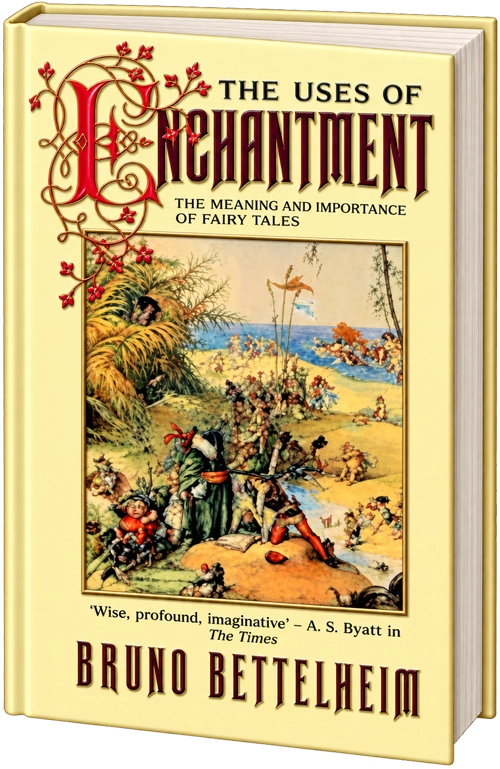
In this section of the lecture, the talk also considers other pedagogical academic approaches and attitudes to Disney, such as gender and race, as well as personal, ideological, and political readings. On the whole, the talk rejects the call for academics to put forward ‘privileged dominant readings of Disney animated films’, as suggested by some in the world of academia, arguing that it is not the job of teachers to tell students how and what to think. The lecture also suggests, much against the current wave of criticism of Disney, that academics take a far too literal approach to Disney. They ignore the work of people like Bettelheim, who, THE USES OF ENCHANTMENT, argues that an overemphasis on the realism of the contemporary world is unhelpful in understanding fairy stories. For example, many critics ask why, if Disney cares so much about family values, aren’t there more mothers in the animations? As Bettelheim has pointed out, stories such as ‘Cinderella’ do have representations of motherhood, both good and bad, built into the story structure, except, of course, they are not in a literal form. It is also suggested that academics are sometimes a little too selective in their approach. For example, much is made of consumerism in criticism of Disney, including Ariel representing aspirations of consumerism by collecting land objects. However, an anti-consumerist character such as Cruella de vil is dismissed by academics as merely an example of ‘individual wickedness’. The talk suggests that this is hardly an even-handed approach.
The lecture goes on to apply the model of mythical story structure, as set out in Joseph Campbell’s THE HERO WITH A THOUSAND FACES, to HERCULES. This involves the Call to Adventure (the discovery of the token); the Refusal (Phil’s reluctance to accept the challenge); the Road of Trials (the first of many being Nessus); the Apotheosis (achieved by Hercules through self-sacrifice); and the Refusal of the Return (a rejection of his god form because he wishes to remain human). The talk then spends some time looking at the role of the Mentor archetype in Disney animation, concentrating on Phil in HERCULES.
Having set out some of the mythological elements of story in HERCULES, the lecture goes back to the first point made about Disney and the animation genre: the supposed makeup of its primary audience. Although not defining of genre, it can be argued that if academic critics ignore the key appeal of Disney animation to children, then they are missing the genre’s central nature and purpose. Here, the talk suggests that the central theme of the Disney animated classics is the story of the outsider in their own community: Dumbo, Ariel, Belle, Quasimodo, and even, despite his strength, Hercules. So many of these Disney characters are runaways from their own community, especially Pinocchio and Simba. Each story involves some degree of re-integration within that community or an acceptance by a new community. What Bettelheim argues is that all children see themselves as outsiders to some degree, and fairy stories, at the very basic level, are a means by which the child can cope with unconscious conflicts concerning their place and role in society. Although another writer on fairy stories, Marina Warner, argues for a more historical context for such stories, there is still an acknowledgement that fairy stories of whatever period reflect real domestic contexts that children find themselves in. The talk argues that either of these approaches to Disney animation is a more fruitful endeavour than the current pedagogy that dominates most academic criticism of Disney.

Steve Nallon in this talk on cinema about television (with the focal example being PLEASANTVILLE) looks at those movies that are about the television industry, the making of television, or the viewers’ experience of watching television.
The talk begins by considering Marshall McLuhan’s famous remark from his book UNDERSTANDING MEDIA (1964) where he says, “the medium is the message”. The talk asks: first, to what extent the medium shapes the message it transmits; and, second, to what extent, in these days of so-called postmodernism, are we too knowing of the nature of the medium. Picking up on this last point, the lecture suggests that, far from being a recent innovation, creators have for centuries had an awareness of the media they are working in. For example, in the prose fiction, there is Sterne’s TRISTRAM SHANDY and in the theatre there’s Aristophanes’s THE POET AND THE WOMEN. In cinema history, there is the early example of the nature of the medium in Buster Keaton’s SHERLOCK JR.. The question is then asked: ‘When a medium explores the nature of itself, or another medium, what aspect of that medium is being represented, its form, the creative process, or the audience response to it?’
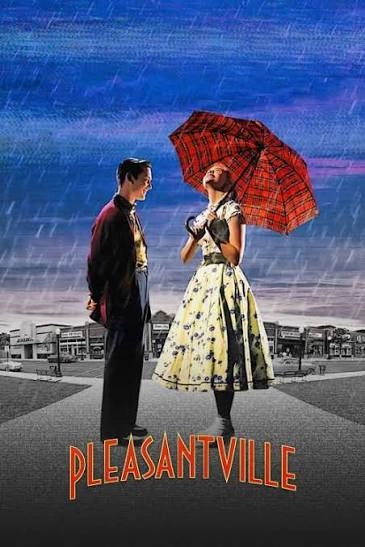
Before considering how cinema represents the medium of television, the lecture sets out some of the differences between the two media, including time (specifically duration and frequency) and space (particularly the use of fictional spaces). The presentation then notes that although there are differences, the two media do have one thing in common that is not to be found in any other medium – and that is editing. However, Steve does point out that the two media have different editing styles. Here, the lecture specifically discusses the television editing style of the 1950s American sit-com and its relationship to PLEASANTVILLE. The choice for the director when making PLEASANTVILLE was to decide between the presentational style of the sit-com form of the 1950s and the film editing style of the modern era. The basic point is that PLEASANTVILLE looks like a film, not a film that reproduces a television-style visual form. Also on the subject of presentational style, the talk observes that television in the 1950s was in black and white, adding that, since it is in the nature of black and white not to be realistic, the medium is always a ‘representation’ of reality and never a simple reproduction of reality. This may seem an obvious and even unimportant observation, but for younger cinemagoers and television viewers, who are almost exclusively brought up on colour images in both media, it is a major presentational difference. More importantly, the change from black and white to colour is a key visual conceit in the film.
The talk then moves on to consider several key terms in academia that are often used to discuss film and media, namely ‘reflexivity’, ‘intertextuality’, and ‘metatextuality’. Reflexivity comes from the idea of the reflexive pronoun; for example, ‘himself’ – as in ‘This lecturer thinks very highly of himself.’ Essentially, reflexivity in a narrative work is when the medium turns back on itself to remind its audience or readership that they are watching/reading a constructed piece of fiction. An example of reflexivity in film would be THE PLAYER, which ends with the plot of THE PLAYER being offered to the main character of the Player in the film (Griffin Mill) as an idea for a movie. Intertextuality occurs when another film (or text) is brought into the world of a film. For example, WAYNE’S WORLD has a scene where the policeman from TERMINATOR II asks, “Have you seen this boy?” Metatextuality occurs when the film draws attention to its own filmic nature. In GEORGE OF THE JUNGLE, for example, the voice-over narrator observes, “Meanwhile, back at the big and expensive jungle set.” The talk suggests that although such terms can be useful in introducing ideas, there are other less ‘jargony’ words that are equally useful when considering film referencing – and these include evoke, parody, and homage.
The lecture then lists a few of the references made in PLEASANTVILLE. The set design, for example, has a look of THE DONNA REED SHOW, and Don Knotts, famous as Barney Fife in the 1960s series THE ANDY GRIFFITH SHOW, is cast as the TV repair man. Both clearly refer back to another era. As well as television references, there are references to films, especially PATTON and CITIZEN KANE, in the portrayal of the mayor. Also, the whole fantasy plot is Capraesque in that it draws from IT’S A WONDERFUL LIFE in both its structure and its setting. Indeed, a strong aspect of the film’s referencing comes from its use of 1950s iconographic images of small-town America, such as the pebbles at the girl’s window and the soda cafe. Towards the end of the movie, the allusions are brought up to date with a reference to the town of Springfield, the home of the Simpson family. There are also visual references to the Bible, specifically Eden and the apple of knowledge. The question the lecture is asking is, ‘Can the complexity and range of the referencing that is in PLEASANTVILLE be accommodated by film studies jargon and, more importantly, do such references conflict, and so potentially confuse the viewer?’ What certainly can be said is that the multiplicity of references in PLEASANTVILLE is not just concerned with television and a focus on the medium of television alone. Such a limitation would be a disservice to the film.
The lecture then moves on to briefly mention some films about films. These include movies about the film business (GET SHORTY), filmmaking (SHADOW OF A VAMPIRE), stardom (A STAR IS BORN), and the audience (PLAY IT AGAIN, SAM). Some are affectionate portrayals, others are more satirical.
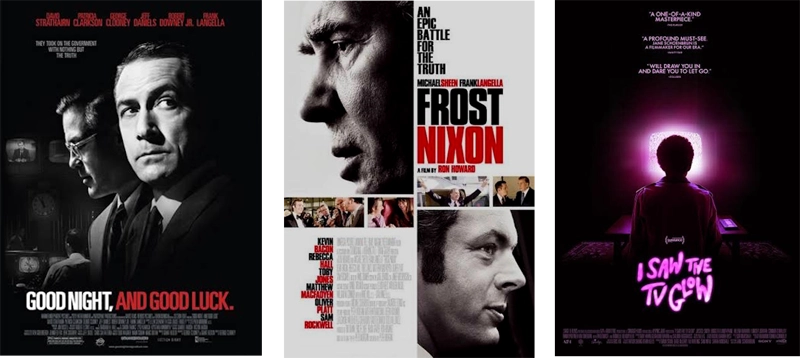
Next, the lecture considers a few films about television, including BROADCAST NEWS, CAPRICORN ONE, TO DIE FOR, and KING OF COMEDY. Following on from this, the question is asked: ‘In the cinema’s portrayal of the media of film and television, which medium is presented as telling the biggest lie?’ To answer this, the lecture compares SINGING IN THE RAIN to QUIZ SHOW and THE TRUMAN SHOW. Lies are told, for each movie has characters speaking words that are not their own, but arguably QUIZ SHOW and THE TRUMAN SHOW tell the bigger lie. The lecture develops this theme with numerous examples and then briefly compares films about the watching of television (POLTERGEIST and VIDEODROME) with films about the watching of movies (CINEMA PARADISO, THE PURPLE ROSE OF CAIRO, and THE LONG DAY CLOSES). The point of all these examples and observations is that, unlike most representations of television in the movies, the representation of television in PLEASANTVILLE is hardly clear-cut. Is the sit-com PLEASANTVILLE a good or bad programme? Is it advisable to watch such television? In a way, though, suggests the talk, these are the wrong questions. Gary Ross, the writer and director of PLEASANTVILLE, claims in the DVD commentary that the movie is about the failure of people to connect with the world. Both David and Jennifer fail to connect with the world around them, but when they do finally connect, that is the moment when they change colour. Likewise, the world of the town of Pleasantville, as presented in the film, has failed to connect with the real world of the 1950s, and it is only when jazz and Picasso arrive in Pleasantville that it finally changes colour. The talk concludes this section by observing that television of the 1950s did not lie directly, but it did lie through omission. The talk makes the observation that in more recent years movies have taken a more positive view in general of the power and influence of television, citing examples such was FROST/NIXON, and GOODNIGHT, AND GOOD LUCK, and, more recently, I SAW THE TV GLOW.
Steve’s talk moves to a conclusion by observing that when film represents television the representation of television might not be what the film is actually about. If that is the only consideration, then one might be missing the entire point of the film. THE TRUMAN SHOW might be regarded as being about television, but it also rejects the tradition Hollywood notion of ‘The Grand Narrative’, where every action has a reason, every cause has an effect, and every event has a purpose. Indeed, the talk observes, the name of the guide or god-like overseer is Christoff. Steve suggests that PLEASANTVILLE is not really about television, even though its representation of television is complex and challenging. Instead, he offers the idea that the real focus of PLEASANTVILLE is America coming to terms with its so-called Utopian era of the 1950s. Steve argues that PLEASANTVILLE is setting out a third way of living with the past in the present. It seems to be suggesting not an attitude of outright rejection of the past, as Jennifer at first seems to represent, nor an outright rejection of the present, as David seems to want in the early section of the movie, but instead a coming to terms with both.

Steve Nallon’s talk ‘The Hollywood Formula’ begins by making the somewhat obvious observation that we are all storytellers. Storytelling is one of the defining characteristics of the human species. The need for story, as much as food and water, seems to be part of our genetic wiring and makeup. Myths are passed from one generation to the next in such a way that stories act as a sort of encoded DNA so that messages can be passed on from past to future, and from one generation to the next. Stories contain ideas, values, and lessons that help shape what we believe, and how we see and think of the world. Stories connect the individual to society by means of empathy, walking, if you will, in the shoes of others, thus helping connect the individual to himself or herself by seeing aspects of oneself in the lives of others. In this sense of connection, stories and myths become a means of seeing how a society thinks and how individuals see themselves within the context of that world. And, in looking at the specifics of the Hollywood story formula, the lecture asks, ‘What does the American movie reveal about America and what is to be an American?’
Steve’s talk first considers the idea of dramatic conflict in stories. These include internal conflict with oneself, external conflict with other individuals, and social conflict with whole groupings such as institutions and powers of government. There is also the challenge of the environment and, at a spiritual level, the eternal struggle with the cosmic forces of destiny and forces beyond our nature. Certain media might be said to be more suitable for portraying certain types of conflict. For example, the internal conflict of a human being is often found in novel writing, notably in the works of Virginia Woolf and James Joyce, whereas struggles against the cosmic forces of destiny feature heavily in epic mythology, such as Greek theatre and the Homeric tradition.The classic American story usually involves clashes with other individuals, social conflict with institutions and authority, and challenges with the environmental forces of nature. JAWS could be said to be a classic example where all three conflicts combine. Individuals are in conflict throughout; there is also the battle of the Roy Scheider character with the commercial institutions of the beach represented by the mayor, and, as the movie progresses, the conflict of man with the sea and one of the greatest antagonists of nature, the shark. GONE WITH THE WIND, too, has conflicts at various levels in that there is a love triangle, a war setting, a strenuous battle with the land, and, famously, a fire with a city ablaze. The same can be said for THE AFRICAN QUEEN, which has a First World War setting and explores the conflict between a drunken sailor and a preacher’s sister, alongside the challenges of a river journey filled with rapids and swamps. The talk suggests that a key point of similarity in all these films is that the individual can and does make a difference – one that is substantial with lasting effects.

The talk argues that these components of story are very different from those which could be said to be in the European tradition. The individual can and does make a difference, but it is usually smaller and more realistic in scope. For example, the film OF GODS AND MEN, concerning Trappist monks in the middle of a conflict in Algeria in the 1990s, focuses on a group rather than an individual, and, yes, they do make a difference, but it is relatively small and ultimately short-lived. Some might even see it as futile, at least in a worldly sense. The talk suggests that the thinking and scope behind the distinctly bigger American vision comes in part from the importance of the individual in the American culture. The constitution, which itself has roots in the ethos of the Pilgrim Fathers, puts the individual at the centre. There’s also the historical pioneering tradition of the early settlers. In anthropological terms, America has been, and to some degree still is, an individualistic pioneer country in a way that was never part of the European experience. And central to the myth is the lone hero, often operating outside the law in some way, who ultimately does ‘what a man’s gotta do.’ In STAR WARS, Han Solo isn’t called ‘Solo’ for nothing.
Steve’s talk then goes on to look at the tradition of what is sometimes called ‘The Theory of the Grand Narrative’. This way of seeing the world perceives life as a series of causal events that are purposeful and have an achievable goal, where trials are overcome and the aim is accomplished – all in such a way that the individual changes irrevocably, usually for the better, and a form of closure is reached and maintained. All very neat, clear, and simple. The Grand Narrative is perhaps how we would like to see the world rather than how it truly is. Nevertheless, this way of seeing life is the one that is predominantly presented and told by Hollywood. To some degree this reflects human nature in that our ‘hard-wiring’, if you will, is to make connecting links, for we have a brain programmed to find patterns and causality. Human beings want to find purpose and meaning in life, and, with all their causal links and drives, stories offer a guide as to how to do that. However, the lecture points out that this is not how everyone sees life. Experience shows us that the world is not neat, not clear, and rarely, if ever, simple. Chaos and chance are often more evident than causality and order. In very general terms, Hollywood and the American story tradition tend to follow the ‘Grand Narrative’, whereas the European and Russian traditions are less clear cut.
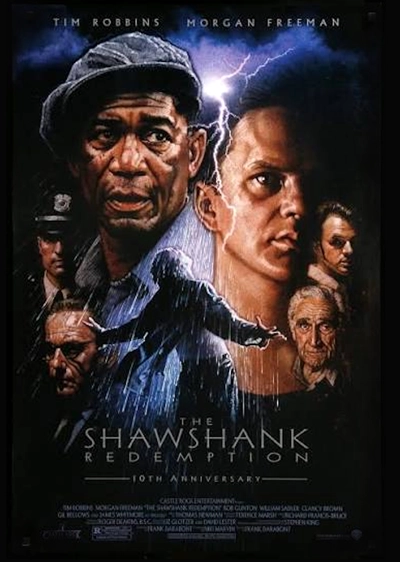
The talk then goes on to focus on two films that are examples of the American or Hollywood way of presenting and telling story, namely THE SHAWSHANK REDEMPTION and CASABLANCA. Curiously both use prisons in a literal and metaphorical way. Both are redemption stories, both feature a central figure of one man who can and does make a substantial difference to his life and the lives of others. Both narratives too are love stories of male friendship and bonding. A key point as well is that the hero of each movie is seen and presented as the hero of his own story. In short it’s an ethos that says, ‘I can change and become the person I believe I can become and who I am meant to be.
The talk then turns to consider the story craft of each tale, looking in detail at structure, story components, and narrative techniques. Guidebooks setting out the way to create a story, and specifically how to write a screenplay, go back at least as far back as 1945 with the publication of THE TECHNIQUE OF SCREENPLAY WRITING by Eugene Vale, and in more recent years we have had Robert McKee, John Truby, and John Yorke. Arguably, it is a tradition that can be ultimately traced right back to Aristotle’s POETICS. The lecture, therefore, looks at one of the well-established principles of dramatic construction, namely ‘the change from ignorance to knowledge’, or anagnorisis as Aristotle referred to it in POETICS. A modern way of expressing this would be the term ‘recognition story point’ or simply the twist or turn in the plot. Numerous examples are offered from recent movies as to how this works in practice and in the context of a dramatic structure. Next, the talk considers Aristotle’s principle of ‘the change of fortune to the unexpected outcome, or peripeteia, that leads to ‘astonishment’ (thaumaston). Again, examples are offered before examining how these dramatic techniques work in the context of both THE SHAWSHANK REDEMPTION and CASABLANCA, especially how they link to the theme of redemption. Once these techniques and mechanisms of storytelling are understood and worked with, they tend to lose their mystery, much like seeing the backstage life of the magician and how the trick is done.
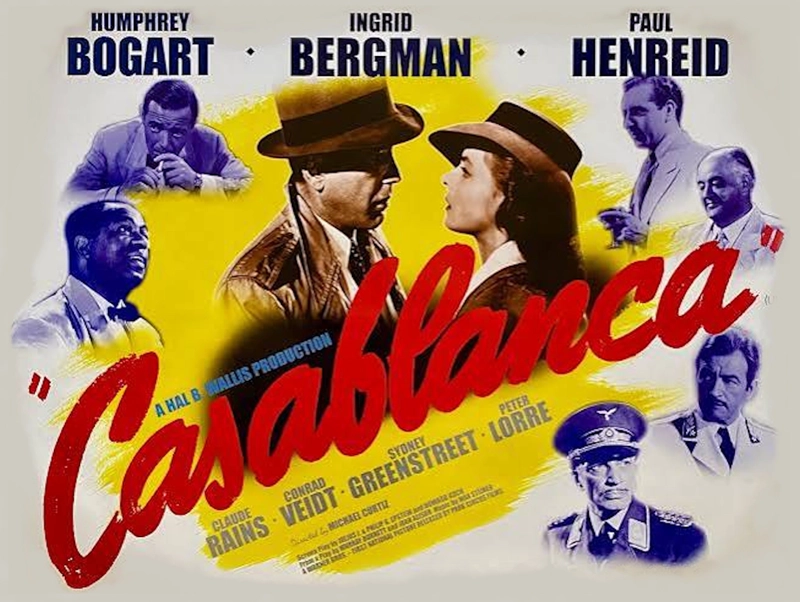
A final point about story craft in THE SHAWSHANK REDEMPTION and CASABLANCA is that each movie makes sense (without thinking too much about some of the practicalities of the action) and is coherent – which in comparison with the European tradition of movie-making is not always the case. Compare, for example, the films of Haneke such as THE WHITE RIBBON and HIDDEN with your standard Hollywood movie. Examples, though, are offered of some American movies in a similar vein, but it is pointed out that these are often low-budget independents with a more limited cult following.
The talk concludes by saying that story techniques are very effective and, at least in the Hollywood screenwriting formula, have become a prerequisite. Unconsciously or otherwise, after repetitive viewing of movies that work in this way, audiences expect reveals, twists, and, at least on occasion, astonishment. The worry, suggests the lecture, is that audiences may begin only to accept movies and stories which work in this way – and perhaps worse, expect such in our real lives as well.
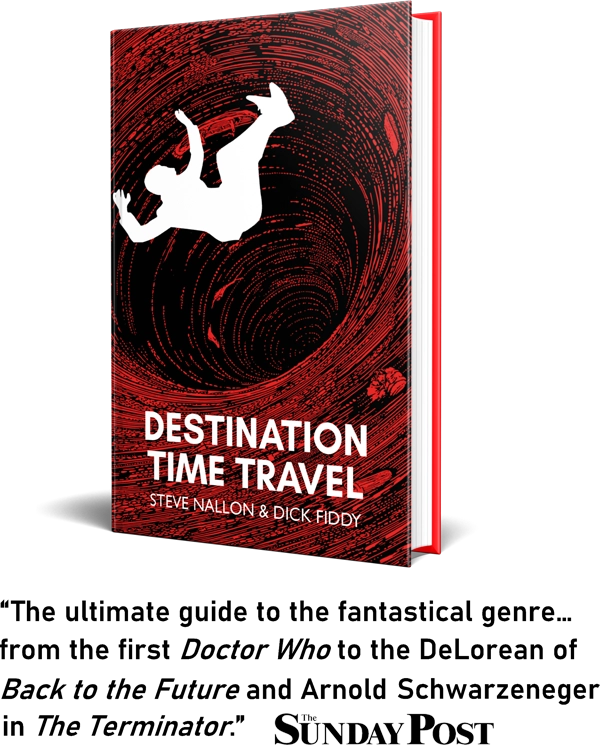
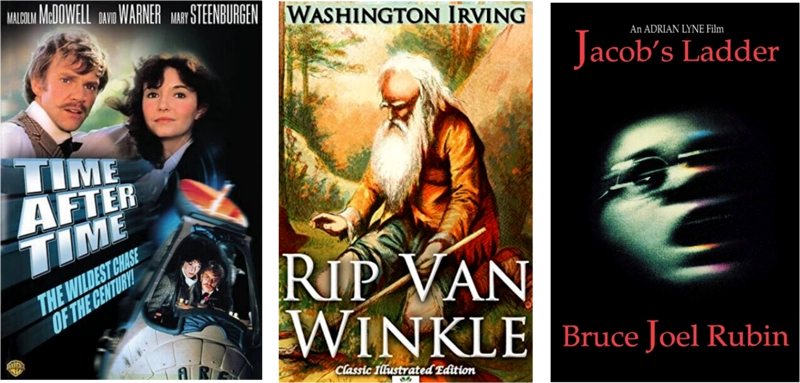
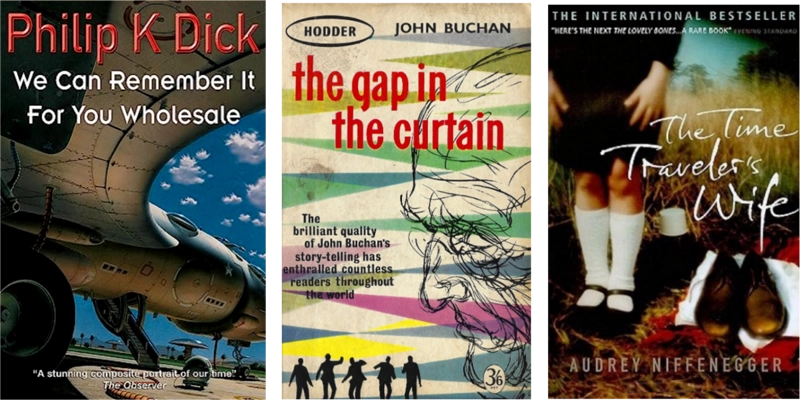
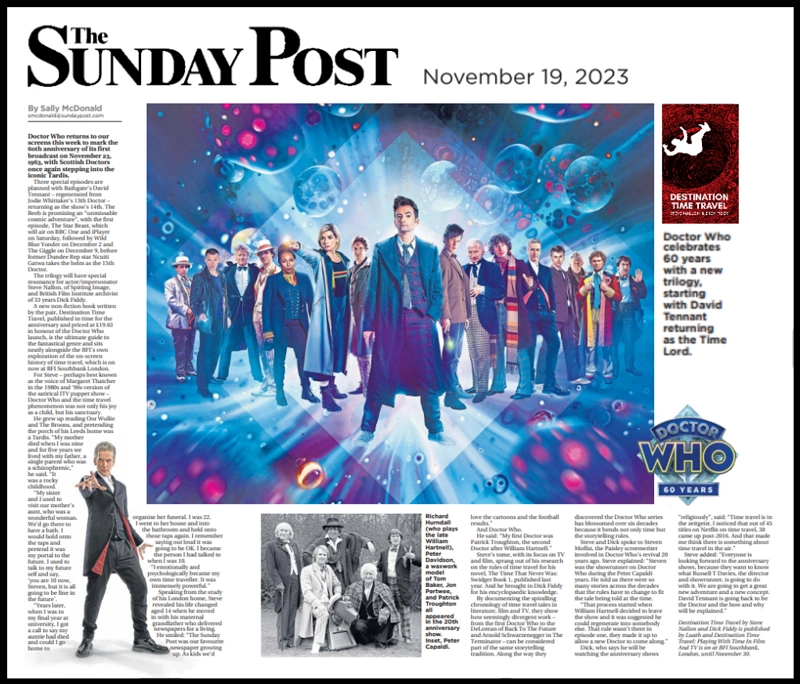
Steve Nallon’s lecture, ‘Destination Time Travel: A Journey in Film and Television’, explores the storytelling craft, tropes, philosophy, and science behind the time travel genre. This detailed talk is based on the book of the same title, which Steve co-wrote with the British Film Institute archivist Dick Fiddy and published in October 2023. In addition, Steve gave the keynote lecture that launched the ‘Destination Time Travel’ film season at the BFI that coincided with the book’s publication.

Steve Nallon’s ‘Destination Time Travel’ lecture focuses on how time tales have become part of popular culture. The talk covers iconic stories ranging from well-known television series and movies – such as DOCTOR WHO, BACK TO THE FUTURE, THE TERMINATOR, STAR TREK, and the Netflix series DARK – to lesser known tales such as BERKELEY SQUARE, FELIX THE CAT TRIFLES WITH TIME, TOMORROW I’LL WAKE UP AND SCALD MYSELF WITH TEA, and TRIANGLE.
Steve’s lecture examines the ‘tricks of the trade’ that writers use to build coherent time-bending narratives, including the use of physical time machines (for example, the technology of the time-travelling DeLorean and the TARDIS), ‘time windows’ (for example, their use in DEVS and THE TIME TRAVELERS), and ‘time doorways’ (meaning portals, gateways, and time vortexes). The talk looks as well at the many time travel paradoxes, deep-diving into the head-scratching puzzles of logic that are essential to the genre – including time loops and causal loops – plus the corkscrew thinking required to map out alternate timelines and multiverses without breaking the story’s internal rules.
Next, the talk considers the character archetypes of the time travel tale, focusing specifically on the roles of Time Beings, Time Villains, and Time Guardians. Then there’s an analysis of the story tropes of the time travel genre, particularly the common narrative drivers – such as preventing an endangered future or being stranded in an unfamiliar era – and the fear of ageing and mortality. The lecture looks next at utopias, counterfactuals, time sleep stories, and the roles of dreams, foretelling, and memory.
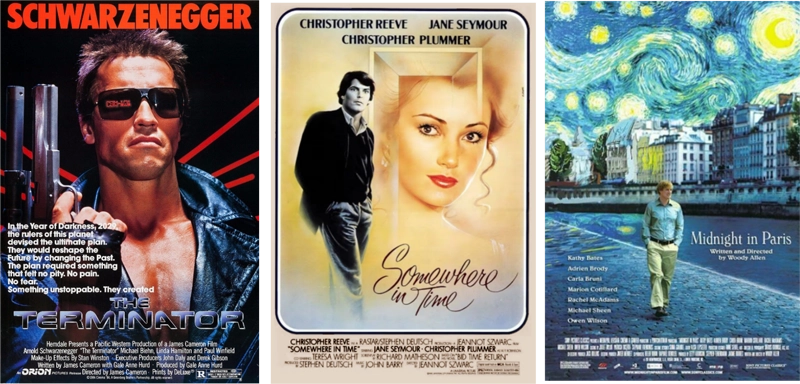
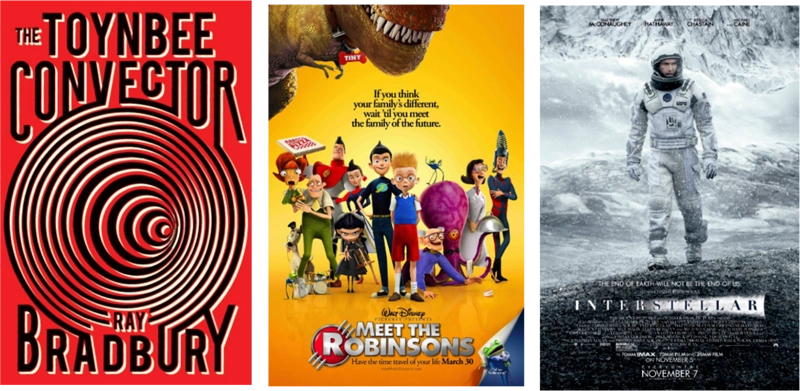
Steve’s talk then turns to the philosophy and science of time travel, touching upon the underlying physics (general theory of relativity) and the philosophical questions that time travel forces characters to face, particularly the classic debate of fate versus free will. There’s also a look at the theological place of God in time and whether or not ghosts could be described as time travellers.
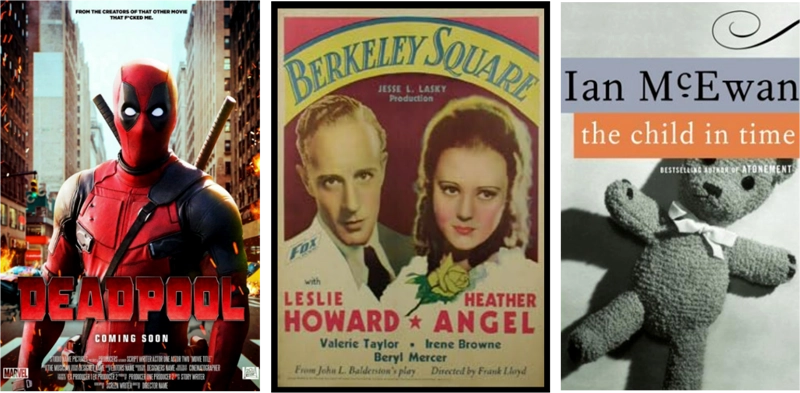
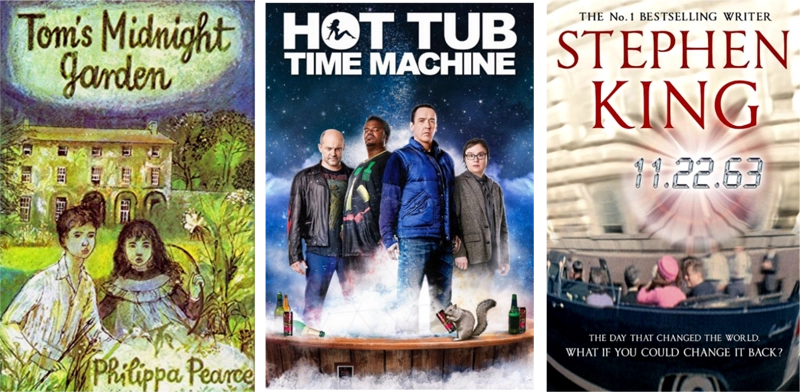
The lecture is ultimately a celebration of our cultural obsession with time travel and concludes by asking what is the continuing appeal of the genre and where might the time travel tale go next. And, if you happen to have travelled to the future and come back, do let us know the answer!

Summary: Steve Nallon’s talk ‘The Haunted House Movie’ considers the origins of the genre, its tropes, motifs, cinematic techniques, scenarios, and recurring archetypes, particularly matriarchal and patriarchal figures.
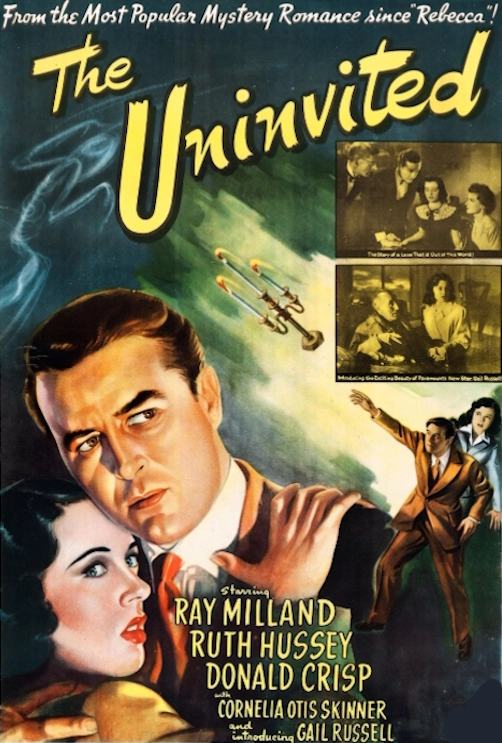
Steve’s talk on the haunted house movie, with THE CHANGELING (1980) as the focal example, considers the origins of the haunted house genre and what is often its central plot action – namely, an investigation into a past crime as a result of some sort of supernatural manifestation that is now impinging on the present. And that key narrative drive is there, for example, in THE UNINVITED, a seminal haunted house movie released in 1944. In fact, THE UNINVITED has many of the tropes and story beats now familiar to the genre, such as warnings not to buy the house, local gossips who provide the exposition, supernatural possession, the servant who takes a dislike to the house, and the inevitable séance scene. As well as these, there are visual and sensory moments, such as the coming on of an eerie coldness or strange smell, a hissing cat, candles being blown out, and the ubiquitous nearby old and creepy tree. And in the talk, Steve illustrates how these story beats and visual images can be traced through such movies as THE CHANGELING (1980), SINISTER (2012), EL ORFANATO (released as THE ORPHANAGE in 2007), STIR OF ECHOES (1999), WHAT LIES BENEATH (2000), and many more.
The talk acknowledges that there are creepy house movies that don’t fit the back story crime investigation scenario, plus ghost movies that better fit into a comedy or romance genre, rather than mystery tales. It should be stated, too, that there are many movies where hauntings don’t take place in houses as such, but rather in hotels, schools, or ships. That said, some of these movies do involve a family in a domestic setting and so perhaps our definition of what is meant by a ‘haunted house’ should be more open and flexible. And it’s with this in mind that the article sets out to explore the haunted house movie genre – beginning with the nature of the house itself.
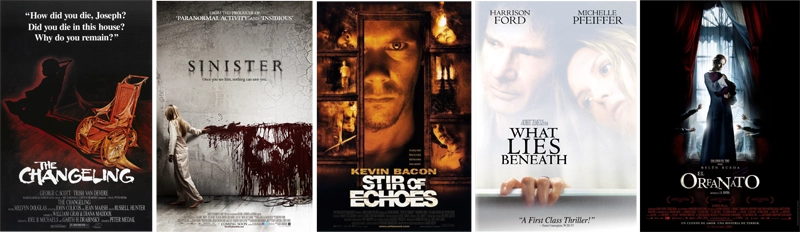
Haunted houses come in many shapes and sizes, as do their grounds and surroundings. Additionally, there’s how everything is shot and presented cinematically. Within the house itself, there are various rooms and spaces – notably attics, staircases, corridors, cellars, and bathrooms – that are key from a haunting perspective. Here, the article identifies the specific dramatic functions each plays in a haunted house story. Following this, Steve’s talk considers the concept of the genius loci and the idea that the dwelling itself is a malevolent magnetic force or is possessed by needful spirits. Such spaces seem to worm their way into the minds of those who stay there, and so it’s in this context that the talk considers in depth the psychological aspect of the haunted house movie. Arguably, though, the most important aspect of any haunted house is that it is a haunted home, for a major theme of the genre is the family under threat and the protection of children. And it’s with this in mind that the article moves on to consider the resident hauntees.
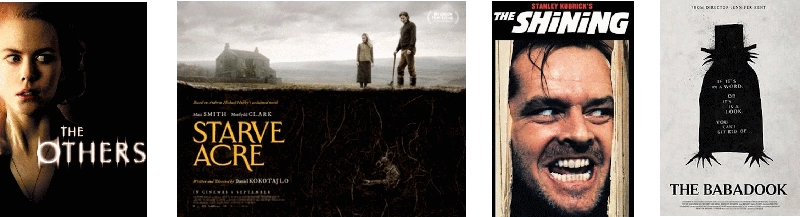
Steve’s lecture argues that the maternal figure tends to be the most protective and watchful character (for example, THE ORPHANAGE, STARVE ACRE, GHOSTWATCH, THE BABADOOK, THE INNOCENTS, THE CONJURING), whereas the paternal figure is often a disruptive force, especially if he is experiencing a loss of status or a sense of failure. The prototype here is, of course, Jack Torrance (Jack Nicholson) in THE SHINING (1980), but the talk also looks at the father figures in THE AMITYVILLE HORROR, SINISTER, BURNT OFFERINGS, STIR OF ECHOES, and 1408.
Next, there’s the crucial role that children play in haunted house tales. A classic trope is that it’s often the child who is the only one at first who can see the ghost, though this is usually dismissed by the parents as an overactive imagination. To the child, the supernatural manifestation may seem innocent enough, but its motive often becomes more sinister, and some sort of abduction results. That’s when the family crisis really kicks in.
In tandem with all this, there is often an investigation into a past crime that creates a rupture within the family. And it’s the injustice of the crime that usually drives whatever it is from the past that is impinging on the present. The talk argues that it is these aspects of such narratives, as well as the shocks and startles, that make the haunted house scenario such an enduring and fascinating genre.
The talk then moves on to consider the story craft of the haunted movie. Steve suggests that a supernatural tale can be as speculative and imaginative as the screenwriter wishes, but it must work within its own logic and limitations. Furthermore, the writer and director are free to make use of any story trope going, but conventions ideally should be reinvented in some new way. Another basic point is that the actions and choices of the characters should be as realistic as possible to human behaviour. Related to the credibility issue is keeping the tale as pacey as possible, so that the audience doesn’t have too much thinking time to question the whys and wherefores. It’s important, too, that protagonists are given agency, or at least made to strive for answers, for that’s what delivers forward motion to any drama. With these basic pointers established, the discussion shifts to the more specific aspects of story craft in the haunted house movie genre.
The concept of unity of place is examined, particularly in relation to boundaries and the pressure-cooker atmosphere of a confined space. Unity of time is also considered with regard to a movie’s potential use of ‘real time’ (where events unfold in continuity with the movie’s runtime) and ‘non-linear time’ (where time and events are fractured). Examples are offered for each. The importance of a specific time of day (or night) for manifestations is discussed, as is the dramatic value of time deadlines.
Of course, writers can base their haunted house tales on established story frameworks, and so there’s a detailed look at the use of the Gothic tale structure in the movie AND NOW THE SCREAMING STARTS, based on the novel FENGRIFFEN by David Case. There are also those tales where the kernel of the story originates from a real life experience, and it’s in this context that the talk considers David Lowery’s A GHOST STORY and Ari Aster’s HEREDITARY, plus those movies which, in some way or other, make use of childhood angst.

The talk next looks at some of the established story tropes associated with the haunted house genre, including the interdiction warning; the recent trauma or tragedy that has enabled a character to become a ghost seer; the early, strange but explainable incident that makes the protagonist uneasy; an injury of some sort; reluctant or barking dogs; noises blamed on old pipes; sleepwalking; a dream sequence where the real and the unreal blur; recovered memories; a savant character who explains the supernatural phenomenon; the sudden appearance of creepy-crawlies; a séance or Ouija board session; possession by a ghost or supernatural entity; decapitations; a cleansing climactic fire; and a coda that suggests a supernatural presence still remains. Then there are visual, sensory and sound tropes, such as shaking chandeliers; pensive hands on doorknobs or handles; doors or windows that open and close by themselves; strange smells or unusual stains; and that musical instrument which plays itself, usually a piano. Specific examples of these story tropes and incidents are offered throughout this section of the talk.
A story craft device that’s found in pretty much every scary movie is the false alarm or false scare, or the ‘Lewton Bus’ as it’s known to pretty much every horror fan. The talk looks at a variety of false scare techniques and the way filmmakers are constantly striving to be as inventive as possible in order to avoid the cliché of the ‘cat scare’. There is as well in this section of Steve’s talk an analysis of the ‘jeopardy set-up scene’ – which usually occurs early in the movie – plus what contemporary filmmakers refer to as the ‘foreplay scare’, which is the scare that often begins the climactic action.
This leads on to the next section of the talk, and that is the cinematic techniques of the haunted house movie. To start off, there’s a detailed look at the use of lighting and shadows, the creature silhouette, plus light sources and contrasts – especially ‘chiaroscuro’ lighting. Following on from this, there’s an examination of camera placement and movement, camera angles, the use of the ‘Dutch tilt’ and the camera effect known as the ‘trombone shot’. Then, the presentation looks at the visual composition of the image itself within the frame and how it is photographed. Here, the talk considers the ‘rule of thirds’, ‘lead room’, the use of negative space, unnatural symmetry and stillness at the ‘vanishing point’, and deep focus photography.
The talk then moves on to consider what you might call the ‘camera’s eye’, meaning whether what we are seeing is objective or subjective (point of view or POV) or even what’s known as ‘ambiguous camera’. Linked to these are ‘inference edits’, where the viewer is left to decide exactly what the connection is between certain shots. There’s also a look at the history of subliminal editing in spooky movies. Following on from this, the talk considers the use of different types of lenses, plus what it is possible to do with the film itself in post-production.
Another important visual aspect of any haunted house movie is how a ghost is represented on screen. Steve’s talk, therefore, looks at how different film makers have achieved this and the way it links to the narrative theme of the tale. In storytelling, there is of course the well-known adage ‘Show, Don’t Tell’, but often the portrayal of the physical nature of the ghostly presence in haunted house movies is more ‘Suggest, Don’t Show’, especially in psychological horror. And so here, the lecture examines the various cinematic techniques available to filmmakers to achieve this sense of suggestion.
The importance of sound in a haunted house movie shouldn’t be underrated, because images don’t just come from what you see, but also what you think is there from what you hear. This section of Steve’s lecture considers audio levels, ‘infrasound’ or ‘black noise’, the sound design technique known as ‘hyper-Foley’, plus the musical soundtrack and the use of popular songs.

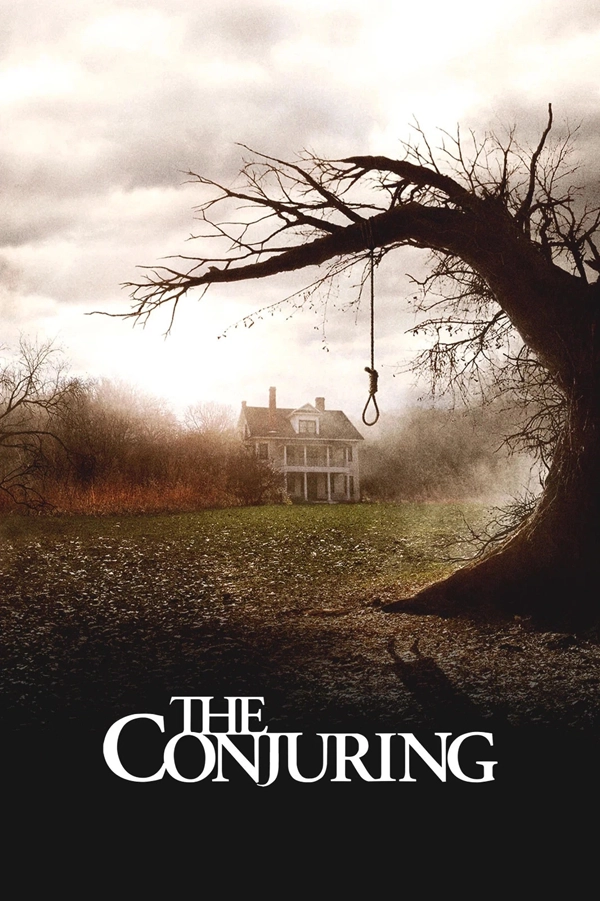
Two visual motifs that movie directors are very fond of are reflections in a mirror or water and the frame-within-the-frame. The re-adjustment of that inner frame, especially when it is a mirror that reveals something previously unseen, often causes a shock reaction. This brings us to the question of the ‘jump-scare’ (or ‘startle reflex’, to use the term coined by psychologists). The talk considers the structure of the jump-scare and its similarity to comedy. Following on from this, there’s a detailed analysis of some of the shockers that James Wan uses in THE CONJURING and how they work. The key point with all these instances is how James Wan is very careful in varying the scare techniques and spreading them evenly through the movie. Of course, film makers have a huge array of frighteners in their jump-scare arsenal and the lecture continues with a look at characters unexpectedly crossing the frame, the leap towards camera that engulfs the frame, a snap blackout or sudden loss of light, and many more.
Much of the section on the cinematic techniques of the haunted house movie is concerned with what you might call cinematic style, which here is defined as the manner in which a movie maker expresses their distinct creative vision through mood, tone, and pace, with the aim of shaping how an audience will experience the story as it’s being presented. But can a movie have too much style? Being distinct is fine, but critics and detractors have argued that for some directors style often takes precedence over substance and that their movies become ‘showy’ or that their films may work well enough as mechanical frighteners but are ultimately clinical and emotionally vacuous. The lecture argues that it’s a matter of balance. It is always worth repeating the old adage, ‘It’s not about the shot, but what the shot’s about.’ In other words, cinematic style and technique are pointless if their purpose doesn’t serve the narrative.
Steve Nallon’s talk on the haunted house movie genre is based on articles written for the award winning magazine CLASSIC MONSTERS OF THE MOVIES.
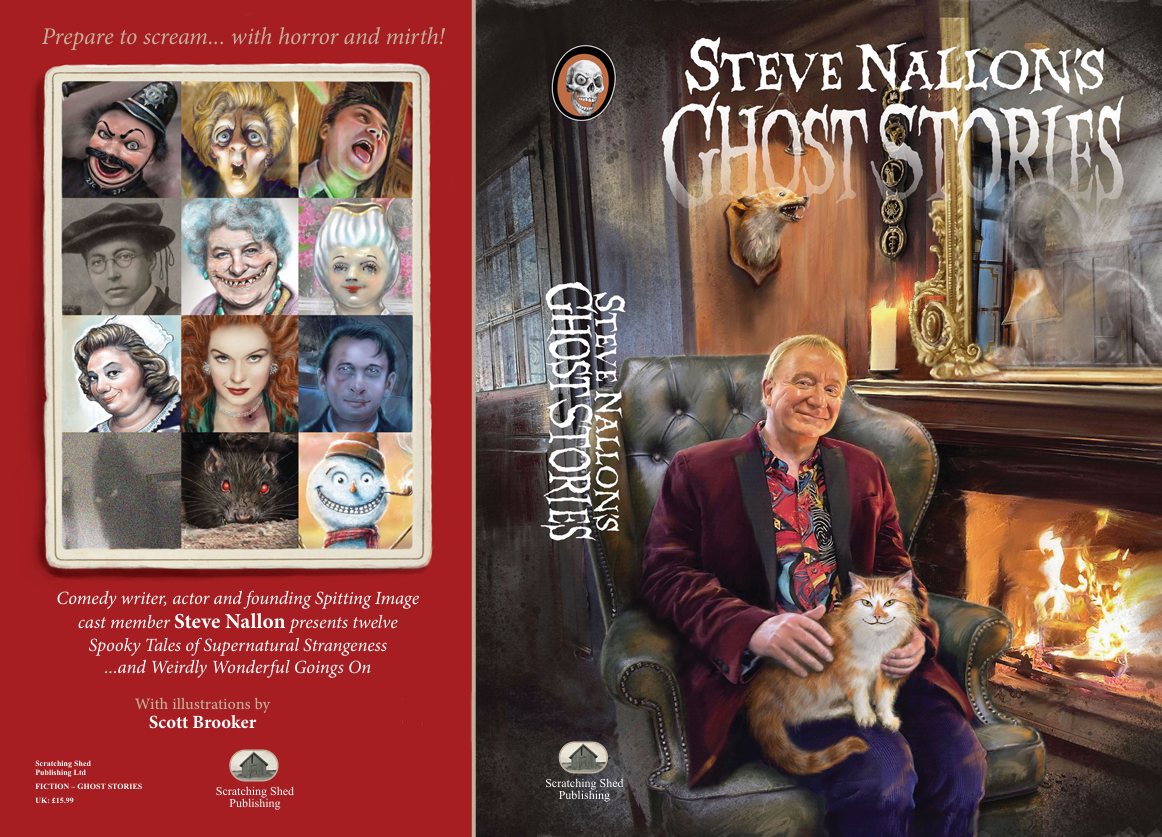
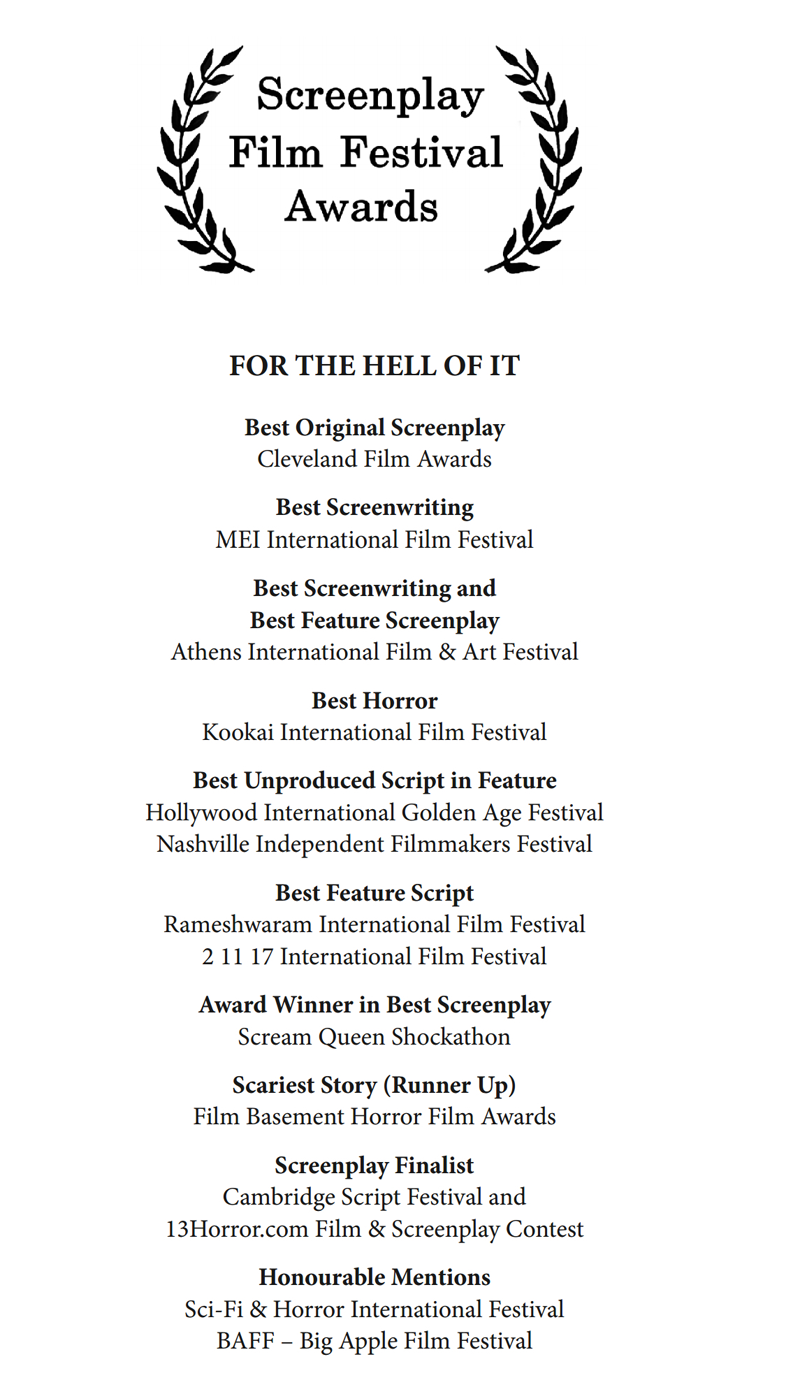
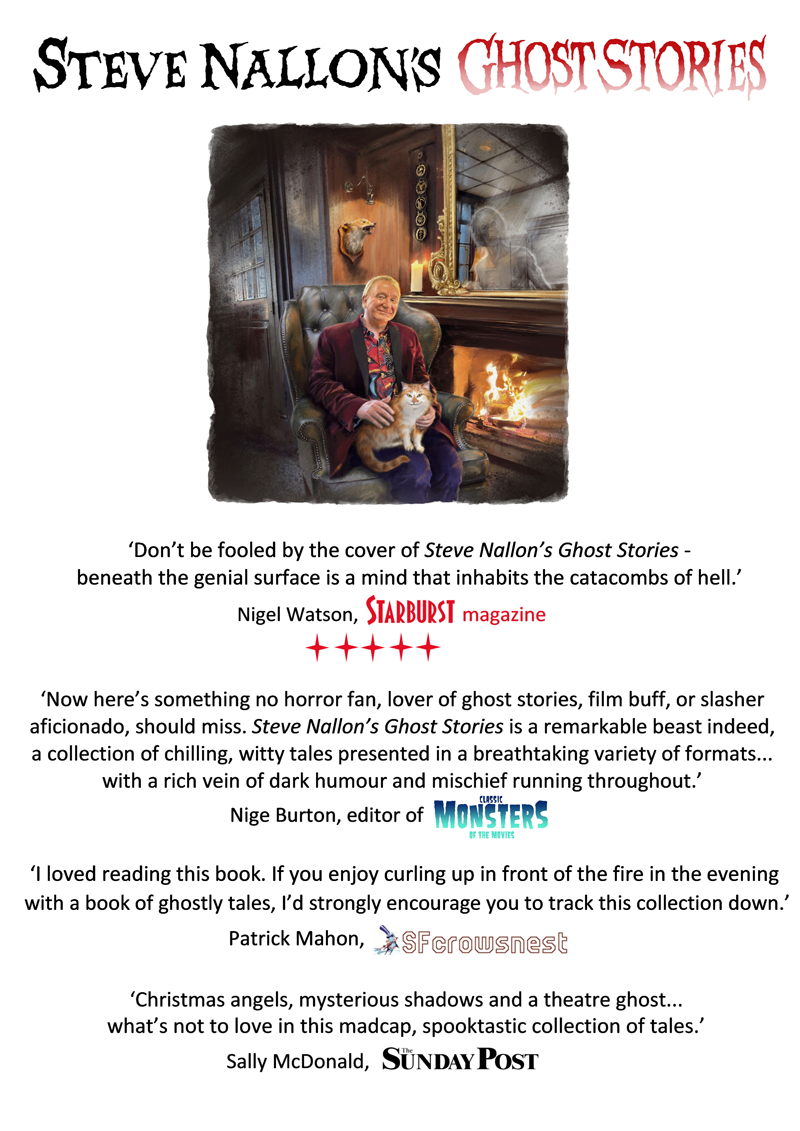
Steve’s collection of supernatural tales, STEVE NALLON’S GHOST STORIES, published in 2024, includes a story called ‘I Was Once a Haunted House’. The tale, narrated by the house itself, makes use of many of the tropes of the haunted house genre. The collection received rave reviews, and one of the tales, ‘For the Hell of It’, written as a screenplay, won multitude of awards in various film festivals.