
Introduction, Summaries and Teaching Resources
Steve Nallon offers school visits with classes, talks, and workshops covering National Curriculum related subjects, topics, and texts in English Key Stage 3, 4 and 5. Extensive teaching resources and visual aids related to the classes and talks are available to download as PDFs and PowerPoint files.

Steve Nallon’s Talks, Classes and Workshops
‘A CHRISTMAS CAROL: Exploring Charles Dickens’s Classic Tale of Time’ looks at the story’s characters and themes, the social, historical, and economic background and context of the narrative, as well as Dickens’s use of Gothic motifs. The talk also includes a unique and fascinating section on the influence of magic lantern and phantasmagoria shows on Dickens’s writing style. This has a particular appeal to pupils because it immediately connects the text to a medium they can relate to, namely cinema. Not only that, the examples offered very clearly illustrate the idea of style, which is sometimes a difficult concept for pupils to grasp. The 21 Story Steps Guide to A CHRISTMAS CAROL is also an option for this talk
Following Steve’s class, a teacher’s handbook for study of A CHRISTMAS CAROL is made available as a PDF for teaching staff.

'The Gothic Story World: Exploring the Gothic Tradition and its Legacy' is suitable for the foundation Gothic module in Key Stage 3 (most commonly Year 8 or Year 9) and introduces students to the conventions, history, philosophy, and distinct style of Gothic literature. A more in-depth class on the Gothic tradition is offered for Key Stage 5 (Years 12 to 13), where a detailed analysis of specific texts – such as FRANKENSTEIN by Mary Shelley, DRACULA by Bram Stoker, and THE BLOODY CHAMBER by Angela Carter – is required for the A-Level English Literature exam.
Steve's own writing, both fiction and non-fiction, covers the Gothic tradition. His Young Adult fiction novel THE TIME THAT NEVER WAS incorporates many of the foundational tropes of Gothic literature, as do several of the supernatural tales in his book STEVE NALLON’S GHOST STORIES. In addition, Steve now contributes articles to the award-winning magazine CLASSIC MONSTERS OF THE MOVIES on subjects such as the haunted house movie.

‘Young Adult Fiction - Change and Discovery at the Story Funfair’ looks at three key areas of YA fiction – namely, maturation, learning, and entertainment. The talk considers the appeal of the YA genre, its tropes, characters, and motifs, as well as its role in the psychology of the developing child. In the class, Steve offers pupils insights into the prototype structure of YA fantasy fiction; reader theories around ideas such as ‘the safe space’ and ‘walking in the shoes of others’; the commercial pressures in publishing that have led to prescriptive narrative content; his own approach to the writing process, including what it was in his childhood that inspired his YA novels. The class involves an interaction section illustrating how an unusual life experience can be the door that opens up an entire story world, and Steve’s 21 Story Steps Guide to THE TIME THAT NEVER WAS is also an option for this talk.
THE SWIDGERS Young Adult book series is now being read in Havana, Cuba. Miya of The International School of Havana said, “The teachers and students all thought your talk was fabulous and enjoyed the whole event a lot! Students were eager to come to the library to borrow THE TIME THAT NEVER WAS after the talk.”
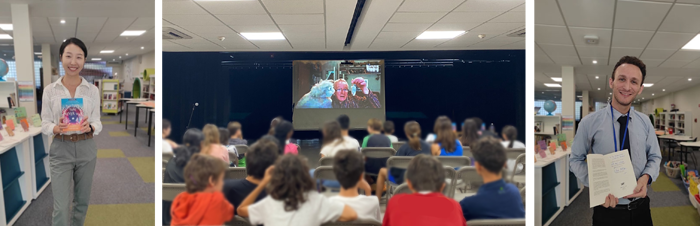

The 'How to Make a Story...' workshop is a popular interactive class run by Steve. In the first section, Steve sets out the essential principles and plot, and following on from that, an original tale is put together on the spot using ideas and plot lines suggested by pupils. Steve’s 21 Story Steps Guide is also an option for this workshop.
'The 21 Story Steps' offers pupils a way of building their own stories from what Steve outlines as the 21 constituent parts that make up a plot. Importantly, because these story elements don’t dictate content, the plots created by the students can be as varied and imaginative as they wish.
‘The 21 Story Steps’ PDF
This downloadable PDF offers a comprehensive overview of The 21 Story Steps and includes analysis of the 21 story steps in both A CHRISTMAS CAROL and Steve’s Young Adult fiction novel THE TIME THEY SAVED TOMORROW.

‘The 21 Story Steps’ PowerPoint Presentations
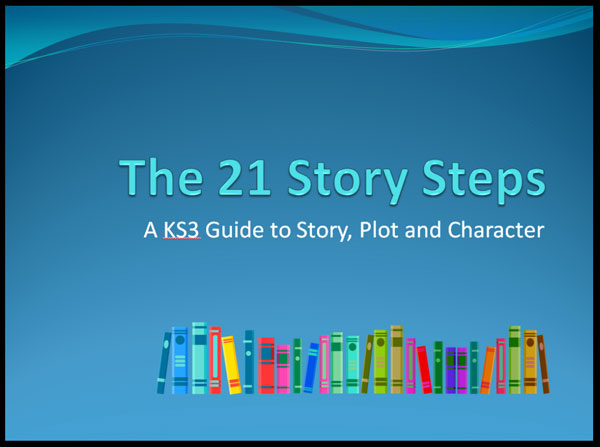
These downloadable PowerPoint files taking students through the 21 story steps are a useful visual aid for teachers in the classroom. The first offers a detailed analysis of the principles of the 21 story steps, the second considers how the relate to Steve’s own YA novel THE TIME THEY SAVED TOMORROW, and the third how they apply to Dickens’s A CHRISTMAS CAROL.
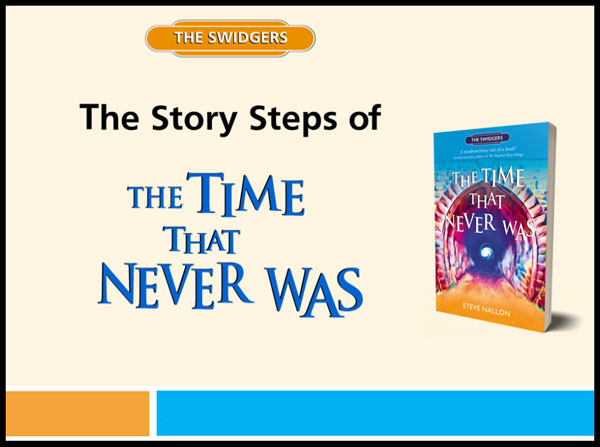
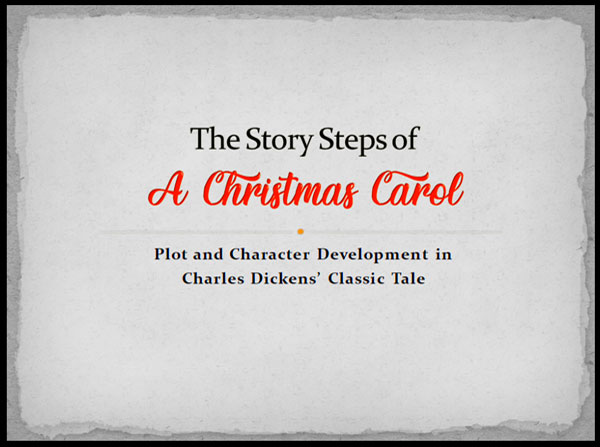
The downloadable STORY CRAFT Teacher’s Handbook PDF has summaries of all Steve’s schools talks and classes, including the ‘21 Story Steps’ guides to both A CHRISTMAS CAROL and Steve’s YA novel THE TIME THAT NEVER WAS. In addition, the handbook contains colour-coded annotations of chapters 1 and 2 of THE TIME THAT NEVER WAS highlighting character information, expositional elements (such as time and place), the mystery aspect of the tale, the central task action, and the narrative design of the story. The handbook also offers insights into the art and practice of story, looking at why we tell and need stories, as well as the nuts and bolts of creating plots and characters. It features, too, in-depth sections on day-to-day writing techniques and literary devices.
Some of the questions and topics
covered in STORY CRAFT:
Why do human beings tell stories?
What’s the difference between a story and a plot?
What are the essential elements of a plot
that you can’t do without for a story to be a story?
Where do creative ideas come from?
What do we mean by ‘action’?
How do you make up a story?
What are the ‘21 Story Steps’ of A CHRISTMAS CAROL?
How do you create a character?
What are the different ways in which a story can be presented?
What is meant by ‘exposition’?
What is a mystery story?
How do you create a story that has a twist?
Who is the protagonist of a tale?
What is meant by ‘foreshadowing’?
Can a story be told as a series of letters or emails?
What is a mentor character?
What do we mean when we say a story must have a beginning, middle, and end?
What do we mean by ‘genre’?
What is an inciting incident?
What do the terms in medias res, praesens historicum, and
deux ex machina mean?
The STORY CRAFT Teacher’s Handbook outlines how Steve’s presentations directly relate to the aims and objectives of the National Curriculum in England, as set out in Key Stages 3 and 4.
Talks, classes, and workshops are available online or in person. An initial consultation with school teaching staff is always useful, for then Steve’s classes can be adapted to the educational needs, exam requirements and modules of the different year groups.