


Summary: A CHRISTMAS CAROL has a fascinating history, and Steve’s presentation delves into how this ‘Ghostly little book’, as Dickens called it, became such an immediate success and why it remains a beloved seasonal favourite to this day. A 21 Story Steps Guide to A CHRISTMAS CAROL is also an option for the talk.
Year Groups: The talk is primarily aimed at those studying A CHRISTMAS CAROL as a set text in Years 10 and Year 11 (ages 14 to 16) as part of KS4.
Main Takeaway: The core insight of the class is understanding exactly what Scrooge means when he says, “I will live in the Past, Present, and the Future. The Spirits of all Three shall strive within me.” All themes and narrative action culminate in this commitment, and so being aware of its values and principles becomes central to comprehending the text.
Dickens’s novella first arrived in Victorian bookshops in December 1843. The decade was known as ‘The Hungry Forties’, and so the talk begins with the historical context of a financial depression and the challenging social problems of the era. Each leading player of the tale is then considered, with particular focus on how visual imagery and metaphor give vitality to Dickens’s characters.
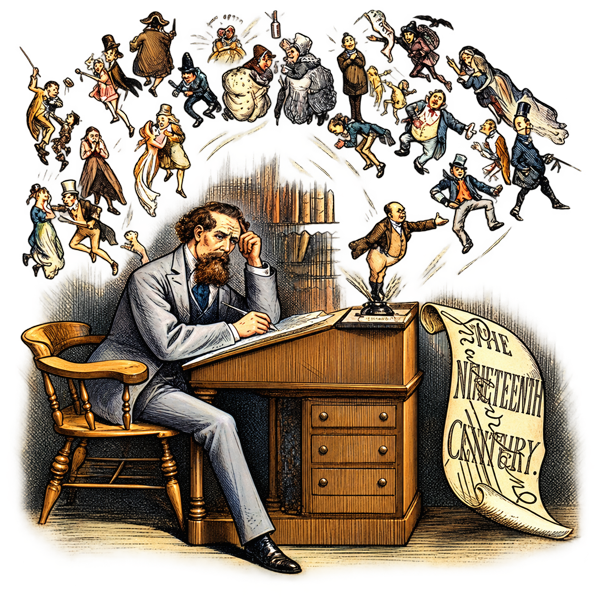
The talk next considers the key role of ‘fancy’ in how Scrooge must change his very way of thinking in order to become his new self. The presentation also explores the importance of memory and the nature of time as expressed in the narrative. Life as a prison is one of the underlying metaphors of A CHRISTMAS CAROL, so the talk examines how Dickens uses the concept of imprisonment in the story. There’s an examination, too, of the many Gothic motifs and tropes that feature in the tale. Dickens’s narrative style is sometimes described as ‘cinematic’. The talk explores what this means, offers examples, and puts forward the theory that many of the visual techniques that Dickens makes use of in his writing – such as suddenly jumping from one scene to another or the alteration in form and size of the spectres – come from his passion for magic lantern and phantasmagoria shows.
Dickens may not have been a church-going man, yet his social Christian ethics are reflected and embedded in his tale. The talk considers these, plus the narrative purpose of the many biblical references that can be found throughout the tale. The economics of A CHRISTMAS CAROL are also discussed, as are the specific theories of Thomas Malthus that were openly disparaged by Dickens in the story.
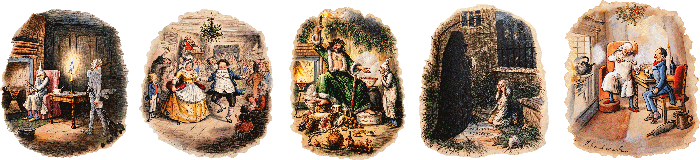
Supernatural storytelling in winter has ancient folklore roots, but it is fair to say that Dickens popularised the annual Christmas tale for the growing urban readership of his day. Steve’s talk therefore includes a look at some of Dickens’s other Yuletide stories, and indeed the whole tradition of the ghost story at Christmas.
The aim of the talk is to inspire as well as inform, and so, if pupils have a better understanding of what Scrooge means when he says, “I will live in the Past, Present, and the Future,” then the central purpose of the talk will have been achieved. And as Tiny Tim said, “God Bless Us, Every One!”

Steve Nallon’s A CHRISTMAS CAROL talk is especially useful for Key Stage 4. The curriculum specifically states that pupils should be able to understand and evaluate texts by drawing on knowledge of the writing’s purpose, audience, and context. This includes its social, historical, and cultural context, its themes and ideas, and the literary tradition to which it belongs. KS4 also states that pupils should be able to select and organise ideas, facts, and key points, and in doing so, cite evidence from wider reading to back up their arguments and conclusions. With all these criteria in mind, A CHRISTMAS CAROL: Teacher’s Handbook offers detailed extracts, quotes, and references that are discussed in the talk. These cover not only Dickens’s wider writing, but also various documents from other published material that influenced Dickens’s intentions and purposes in writing the tale. The handbook also includes a 21 Story Steps Guide to A CHRISTMAS CAROL.
Following Steve’s class, A CHRISTMAS CAROL: Teacher’s Handbook – with detailed extracts, references and quotes covered in the talk – is made available for teaching staff as a PDF. This teacher’s handbook is an in-depth exploration of A CHRISTMAS CAROL, with expansive chapters on THE CHARACTERS OF THE TALE, its many THEMES AND MOTIFS, plus sections on THE ECONOMICS OF ‘A CHRISTMAS CAROL’ and DICKENS’S CINEMATIC WRITING STYLE.
In THE CHARACTERS OF THE TALE each leading player of the story is considered, with particular focus on how visual imagery and metaphor give vitality to Dickens’s characters. In THEMES AND MOTIFS the section called The Fancy of Imagination examines how important the concept of ‘fancy’ was to Dickens and why Scrooge has to change his very rigid and linear way of thinking in order to become his new self. Memory and Reflection considers the emotional human value in the remembrances of times past that can be found throughout Dickens’s work, especially his writing concerning the Christmas season. Life as a Prison takes one of the strong underlying metaphors of A CHRISTMAS CAROL – namely a sense of incarceration and confinement – and examines how Dickens applies the concept of imprisonment to various aspects of his story. There’s also a an examination of Dickens’s use of Gothic Motifs, especially horror, death and the supernatural. The section on Time asks what exactly Scrooge means when he says he will live “in the Past, the Present, and the Future”. Following on from this, Dickens’s Ethical and Spiritual Christianity reflects on the writer’s personal view of faith and charity and how it is expressed and embedded in the story.
In THE ECONOMICS OF ‘A CHRISTMAS CAROL’ there’s a wide-ranging look at the financial backdrop to the tale, the controversies the publication raised, and Dickens’s response to his critics in one of his subsequent Christmas stories. DICKENS’S CINEMATIC WRITING STYLE considers Dickens’s visual style of writing, which in some ways seems to anticipate the techniques of modern cinema. Of course, Charles Dickens died many years before the medium was invented, but he was aware of magic lantern and phantasmagoria shows, and had a strong passion for both. This section of the handbook therefore considers Dickens’s prose style in this context, looking specifically at scene transitions, the way the spectres alter in form and size, and those narrative sections that are presented as a series of vignettes much like a cinematic montage sequence.

Steve Nallon’s UNDER THE MISTLETOE is a warm-hearted seasonal tale of two unlikely angels who help a man recover his memories after a bad experience with enchanted mistletoe. The story is one of a dozen supernatural tales in the collection STEVE NALLON’S GHOST STORIES.
UNDER THE MISTLETOE is very loosely based on Charles Dickens’s Christmas story THE HAUNTED MAN AND THE GHOST’S BARGAIN, subtitled ‘A FANCY FOR CHRISTMAS-TIME’, concerning a gentleman called Redlaw who’s suffering from melancholia, or what we today would call depression. Curiously, this novella is a sort of upside down version of A CHRISTMAS CAROL, for whereas in A CHRISTMAS CAROL, the spectres revive the Christmas memories of Scrooge in order to bring about his reclamation, in THE HAUNTED MAN, Redlaw encounters a doppelgänger spectre who offers him the opportunity of having all his sad memories wiped away. This should, argues his ghostly twin, bring to an end the man’s constant feelings of sadness. An intriguing theory, but one that doesn’t quite work out that easily in Dickens’s tale.
Steve’s UNDER THE MISTLETOE is set in the modern day but incorporates into its back story a comic incident between one of the angels and Charles Dickens himself. Without revealing too much, it’s this encounter which inspires Dickens to write his masterpiece A CHRISTMAS CAROL.
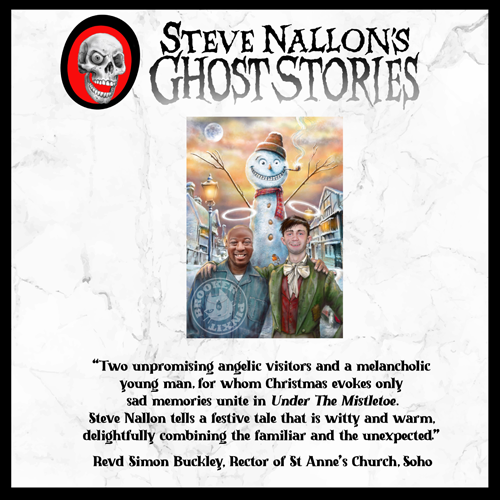
Although Steve’s UNDER THE MISTLETOE is based on the premise of a depressed man having his sad memories removed, there’s little else that follows the Dickens plot. However, the narrative does consciously borrow from two classic Christmas angel movies, namely, THE BISHOP’S WIFE and IT’S A WONDERFUL LIFE, though Steve’s angels are of a very different character. Yet, as with A CHRISTMAS CAROL, UNDER THE MISTLETOE is fundamentally a redemption story – a charming tale of hope, but with it comes a good dollop of mischief and fun.
“Steve Nallon constantly demonstrates a very fertile imagination effortlessly blending tradition with modernity. He has a wonderful ability to raise a smile and tug on the heartstrings within the same story. I’ll never look at what’s on the top of my Christmas tree in quite the same way again.” Alistair McGowan, BAFTA Winning Comedian
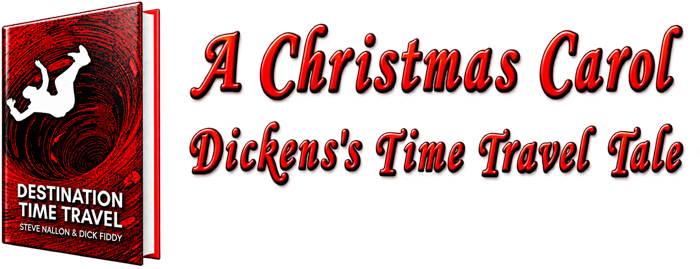
In the opening chapter of DESTINATION TIME TRAVEL, co-written by Steve Nallon and Dick Fiddy (archivist at the British Film Institute), there’s a detailed consideration of Dickens’s A CHRISTMAS CAROL as a foundational time travel tale. The chapter examines A CHRISTMAS CAROL alongside the movie BACK TO THE FUTURE and compares the different ways the two tales explore the concept of time travel.
