Steve’s ‘21 Story Steps’ offers pupils a way of building their own stories from what he outlines as the 21 constituent elements that make up a plot. The advantage of this approach – compared, for example, to what’s known as Freytag’s ‘Pyramid’ or ‘Story Mountain’ – is that the 21 Story Steps offer a practical guide to aid children with their ‘imaginative writing’, which is a specified criterion of KS3. Importantly, because these elements of story don’t dictate content, the plots created by the students can be as varied and imaginative as they wish.
‘The 21 Story Steps’ PDF
This downloadable PDF offers a comprehensive overview of The 21 Story Steps. This PDF includes well analysis of the 21 story steps in both A CHRISTMAS CAROL and THE TIME THEY SAVED TOMORROW.

‘The 21 Story Steps’ PowerPoint Presentations
These downloadable PowerPoint files are a useful visual aid for teachers in the classroom. There are also sections on how they apply to THE TIME THAT NEVER WAS and A CHRISTMAS CAROL.
The 21 Story Steps
So what ‘building blocks’ do storytellers use to construct a plot? Well, one way of exploring that question is to ask: ‘What are the key elements of a story that you couldn’t do without if it is to be a story?’ And these are the 21 Story Steps. Let’s briefly consider what they are...
PROTAGONIST AND ANTAGONIST – Most stories have a central character (the protagonist) who is trying to do something and another character (the antagonist) whose aim is to stop them from doing it. The writer John le Carré once said that ‘The cat sat on the mat’ is not the beginning of a story, but ‘The cat sat on the dog’s mat’ is. Why? Because as soon as the dog comes along and sees his mat occupied by the cat, there’s bound to be trouble – and it’s the conflict between the protagonist and the antagonist that is usually the main dynamic of a story. There are other terms it is possible to use in this context, including ‘hero’ and ‘villain’, but here, it should be said, that the instigator of the plan is technically the protagonist, and that character is not always the same as the ‘hero’. Also, it should be noted, protagonist and antagonist are gender neutral terms.
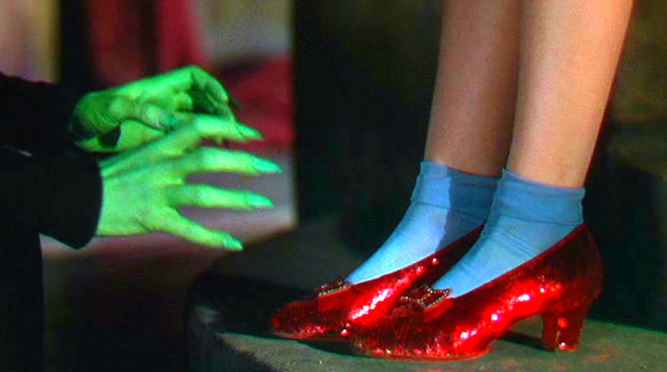
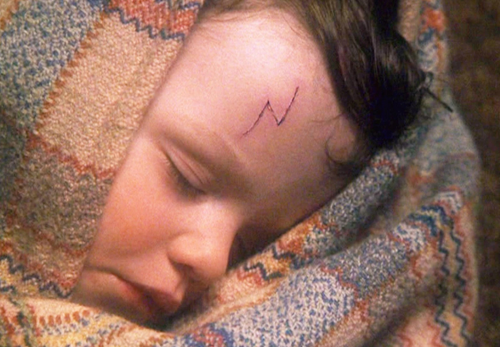
BACK STORY – This is what has happened before the story began, but which is still relevant to what is going on right now. The back story is also sometimes called ‘The Ghost’, because what happened in the past is still ‘haunting’ people in the present. This is particularly the case when a character is dealing with a past trauma. Think here of the events of Godric’s Hollow and that literal scar on Harry Potter – ‘Under a tuft of jet-black hair over his forehead they could see a curiously shaped cut, like a bolt of lightning’ – which becomes the physical embodiment of Harry’s back story.
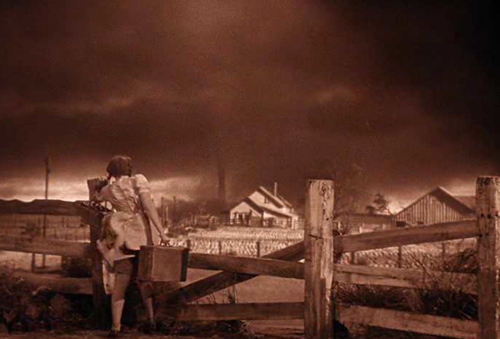
THE DAY OF CHANGE – This is when something happens that creates an imbalance in the life of a character. The Day of Change is referred to by writers as the ‘Catalyst Event’ because it’s what upsets the apple cart and the status quo. The Day of Change can be internal, as in puberty in coming-of-age stories (ROMEO AND JULIET, CATCHER IN THE RYE), or external, as in a sudden change in the weather, especially storms (ROBINSON CRUSOE, THE MARTIAN). THE WIZARD OF OZ involves both types of change, as the tornado is real, but it also represents the inner turmoil of a teenager. She’s not called Dorothy Gale for nothing. The Day of Change can also result from a new arrival in town (JAWS, AGAMEMNON), unexpected information that makes you reevaluate the situation (HAMLET, THE MATRIX), or a chance find, coincidence or encounter that can upset the balance of your world (THE LORD OF THE RINGS, THE GREAT GATSBY). But a Day of Change is not enough in itself: it must incite a need to alter things back to what they were or create a new and acceptable equilibrium.
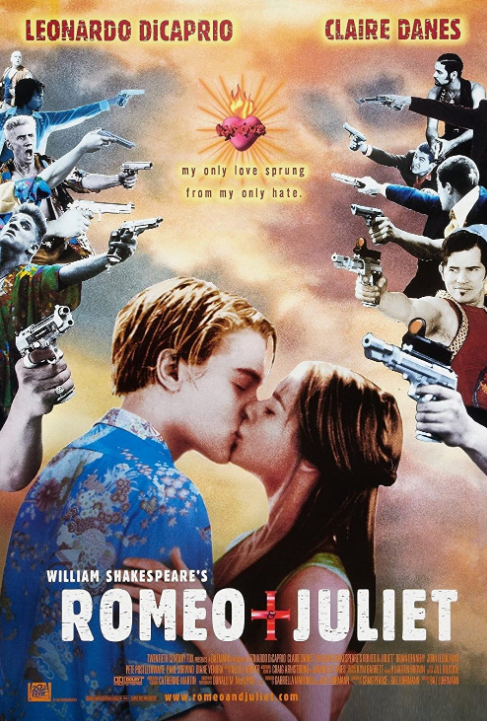
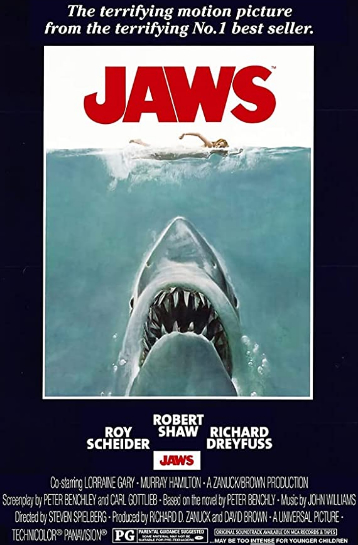
THE TRIGGER FOR ACTION – This is when an incident in the tale incites the desire in a character to change things or correct something that has gone wrong. That’s why this event is often referred to by writers as the ‘Inciting Incident’. And it’s the action that follows from this trigger that drives the story forward – where action can be defined as the purposeful intent of the character to achieve their goal. That’s why the ‘action’ of any tale is always a verb, such as to win, to find, to make, to sell, to escape, to discover, to kill the shark…
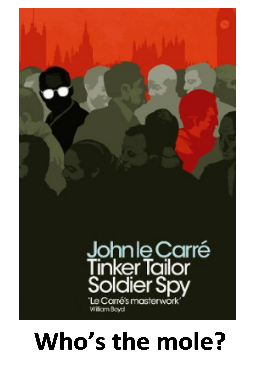
THE PUZZLE – In any story, especially a mystery, there is usually a secret to be uncovered or revealed. The mystery element of a tale raises curiosity, and this is important because one of the reasons why people keep on reading a story is that they want to know what happens next.
THE INNER FLAW OR PROBLEM – This is what is lacking or missing in the character that needs to be put right in order to make the character a more complete and better person. The Greek word for this, which Aristotle uses in his POETICS, is harmatia. A flaw can be a psychological need – those aspects of a character’s nature that are lacking within them, for example, a need to be more self-confident – or a moral need – how a character must learn to act differently towards others, for example, being less bossy. And often in a story what a character learns about themselves and why they must change becomes part of how they ultimately achieve their goal. Or not.
MOTIVATION AND DESIRE – There is always a reason behind a character’s actions, and this usually comes from a want or desire in that character. However, what someone wanted at the start of a tale isn’t always the same as what they want by the end – and this is because the story journey can alter how a character sees themselves and the world. A classic example of this is Dorothy in THE WIZARD OF OZ.
THE CHARACTER ARC – This is what writers call the internal change that occurs in the character as the story progresses. An arc in geometry is a curve between two points, and storytellers use the term ‘character arc’ because as the character moves through a story, there is a transition between what they were like at the beginning point and what they are like by the end point. The ‘arc’ can be many shapes – smooth and gradual or rapid and acute – depending on the story you are telling.
THE TASK AND THE STRATEGY – In a story, the main character is sometimes given a task to complete, or they have to come up with some sort of action plan in order to achieve their goal. Either way, the character needs to find the right strategy and tactics to attain what they want.
HELPING HANDS AND OPPOSING FORCES – Usually, in a story, there are numerous forces and obstacles which work against the main character and their plan. Apart from the antagonist (sometimes called the villain), these opposing forces can include the weather, objects that go wrong, and gateways or thresholds that the main character can’t get past. But often, as well, there are allies, helpers and gifts that can assist the protagonist on their way. If the helper is an older and more experienced figure, then this character is referred to as the ‘Mentor’. Think, for example, of Dumbledore in the ‘Harry Potter’ series, and Granny in the Time Adventure series THE SWIDGERS.
Note here that there is a section on the www.nallon.com website called ORPHANS AND THEIR MENTORS, which discusses in detail the nature of the Mentor, as well as the history and story tropes of novels and stories in popular culture that focus on the orphan child.
TIME LIMIT – Often, a story will have a deadline to be met, which means that the main character must complete the task within a fixed period of time, thus upping the jeopardy and the story stakes. In storytelling, this is usually referred to as ‘The Clock’. Think here of how many of the challenges in HARRY POTTER AND THE GOBLET OF FIRE are time limited.
SETTING – This is the world of your story and includes the time period, the physical space, and that world’s moral and political culture. ‘World building’ is the phrase that writers use for creating an environment that is believable and credible, even if it is a fantasy, a dystopia, or has a supernatural setting.
THE UNEXPECTED OUTCOME – This is when a character thinks something will go one way, but instead it goes in the opposite direction. In HARRY POTTER AND THE PHILOSOPHER’S STONE, Harry Potter thinks he’s in trouble after his first experience on a broomstick: ‘Now he’d done it. He hadn’t even lasted two weeks.’ Harry is marched away by Professor McGonagall, but instead of being expelled, as he expected, he’s taken to meet Oliver Wood. “I’ve found you a Seeker,” McGonagall says. “The boy’s a natural. I’ve never seen anything like it.” Harry Potter goes from believing he’s going to be sent back home forever to becoming a Quidditch Seeker in a matter of moments – a complete turnaround to the opposite. The Greek word for this, which Aristotle uses in his POETICS, is peripeteia. It’s important to say that stories aren’t just built on ‘What happens next?’ but ‘Wow! What happened next was such a shocker!’ – for it’s those unpredictable or unforeseen events in a story that keep people turning the page until they get to the very final ‘twist’.
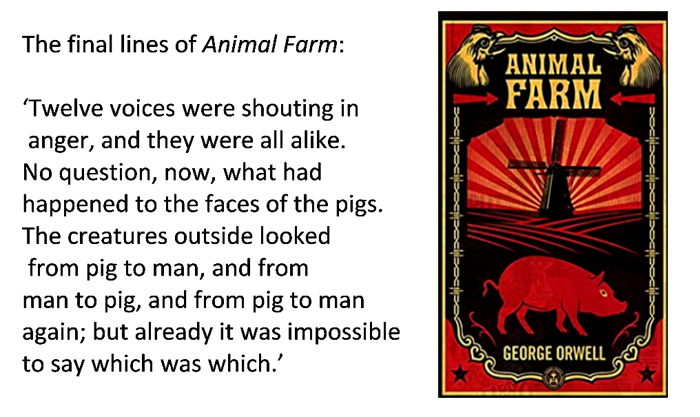
FROM IGNORANCE TO KNOWLEDGE – This refers to the moment of realisation when a character discovers, for example, that someone they thought they knew well is not what they seemed, or said they were at all. The Greek word for this that Aristotle uses in his POETICS is anagnorisis. A well-known example of the change from ignorance to knowledge is in Charles Dickens’s GREAT EXPECTATIONS where Pip had believed his benefactor to be Miss Havisham, but it turns out it was the convict Magwitch. And most ‘Harry Potter’ stories have characters who at important points in the plot are revealed to be other than they seemed to be. The twitching and stammering Professor Quirrell has been wearing a turban to conceal the fact that he allowed himself to be possessed by Lord Voldemort; ‘Mad-Eye’ Moody is discovered to be Barty Crouch Jr, a Death Eater formerly presumed dead; Ron’s rat Scabbers is really Peter Pettigrew, and Tom Riddle is revealed to be the Heir of Slytherin. And it’s worth saying that the idea of ignorance to knowledge doesn’t just involve people, for it can apply to objects and places too
THE HOUR OF DESPAIR – This is the lowest point that the character faces in the story – the rock bottom, you might say. This part of a story is sometimes referred to by writers as the ‘Nadir’ (the word nadir comes from the Arabic naḍhīr, meaning ‘opposite’— the opposite, that is, of the ‘Zenith’, the highest point of the celestial sphere). The nadir is the moment in the tale where the character is at a maximum remove from their goal. A plot can have several low spots, but the one where all seems lost and unwinnable is what we’re talking about here. Writers also use the term ‘Crisis Point’ for this part of the tale – and importantly it nearly always comes just before the climax.
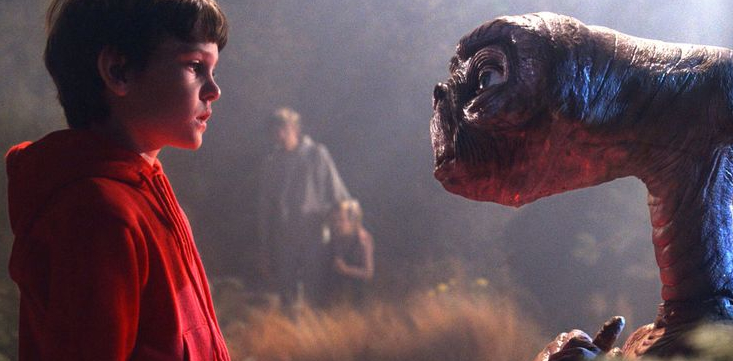
THE IMPOSSIBLE CHOICE – Nothing in a story is ever easy for a character. Often, there is a difficult dilemma that must be faced and a choice made. In E.T. THE EXTRA-TERRESTRIAL, Elliott would like his extra-terrestrial friend to remain on Earth, and E.T. would like Elliott to fly away with him – but both not are possible. The words the characters say are simple enough – “Stay” and “Come” – yet, given all that has gone before, they have tremendous emotional impact.
THE REVERSAL OF FORTUNE – This refers to the change of fortune in story. It can be slow and gradual, but more often it goes from the worst situation to the best situation in a matter of moments. This is because that sort of dynamic is exciting to read or watch. Yet how that reversal of fortune is achieved shouldn’t be too obvious. The rule is to give readers what why want, but in way they don’t expect it. Think here of the sudden importance of the idea that ‘the wand chooses the wizard’ at the climax of DEATHLY HALLOWS. It turns Harry’s situation completely around, but it’s only clear afterwards why exactly that reversal came about.
THE CONFRONTATION OR BATTLE – This is the final encounter between the protagonist and the antagonist. The outcome of this meeting decides how the story action will end. What we’re talking about in colloquial terms is ‘the final showdown’, ‘the supreme ordeal’, or ‘the shoot-out’. In courtroom dramas, this usually takes place on the witness stand, and in Westerns, on a deserted street at high noon.
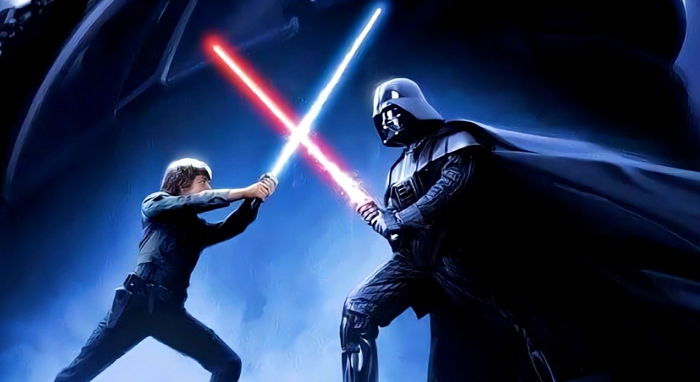
THE CLIMAX – This is when the protagonist reaches their goal. It may or may not be that they achieve or complete the task, but whatever happens, the important point of the climax is that nothing will be the same again. The climax, then, is the apex, top, pinnacle, and zenith of your tale.
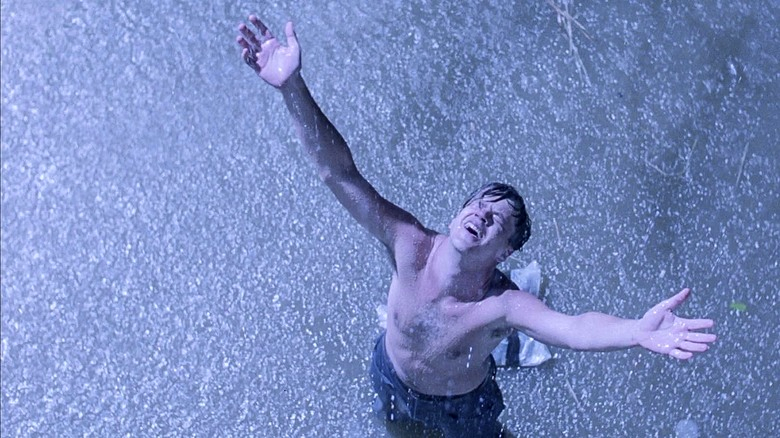
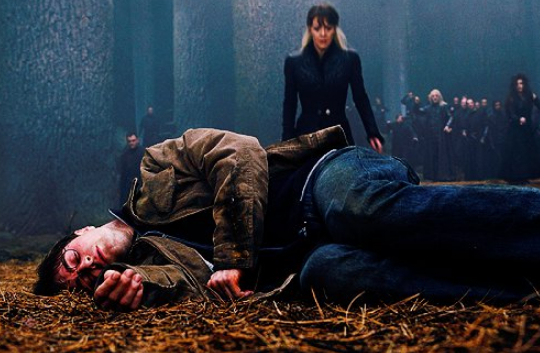
THE REBIRTH – This is when the protagonist changes inside, becomes different in some way, and grows as a person. This often relates back to the inner flaw or what was missing or lacking in the character at the beginning of the tale, but has now been fixed as a result of what has happened in the story. And often here there is what appears to be a physical rebirth of some kind. An example of this is in DEATHLY HALLOWS, where Harry Potter is thought to be dead but is then revealed in fact to be very much alive.
THE RESOLUTION – This is the final element of a story or narrative in which the strands of the plot are drawn together, loose ends are reconnected, and matters that need to be explained are cleared up. The resolution could be said to be the aftermath or breathing space following the climax, and in theatre plays this part of the story is traditionally called the dénouement (from the French word dénouer) meaning ‘unknot’). The resolution is also that part of the tale that gives you a sense of what may come next for the characters and the world they live in. If the opening of a story starts with ‘Once upon a time...’, then it’s the resolution that says ‘And they all lived happily ever after.’
These, then, are the universal 21 Story Steps which all writers use to construct their tale. In principle, they can be applied to any story, from THE CHRONICLES OF NARNIA and A GOOD GIRL’S GUIDE TO MURDER, to ROMEO AND JULIET and AN INSPECTOR CALLS. Some of the 21 Story Steps are essential elements that you can’t do without if your story is to be a story, and these are usually placed in a particular order. The Day of Change comes first, leading to the Trigger for Action, the Story Action, and the Task or Strategy. The Hour of Despair is usually just before the Climax, and the Resolution, obviously, comes at the end.
It is possible to do without certain Story Steps, such as the Time Limit, the Inner Flaw, the Character Arc, or the Puzzle, but leaving these out will make the tale less captivating and less emotionally involving. It’s also worth noting that many story elements such as Back Story, the Unexpected Outcome, and From Ignorance to Knowledge, can be moved around within the plot structure, depending on the type of tale being told.
No storyteller treats the 21 Story Steps as if they are some sort of blueprint, with rules that must be strictly adhered to. The opposite, in fact, for it’s the variations, deviations, and exceptions that make a story truly original, engaging, and entertaining. All stories have their own unique perspective – and they wouldn’t be any good if they didn’t – but you’ll find that the elements of the 21 Story Steps remain key components to pretty much every tale you choose to tell, watch, or read. And knowing and understanding what they are and how they work can boost your creativity when crafting your own tales.
As well his 21 Story Steps Guide, Steve offers a range of talks on the whole nature and craft of story and narrative. These are the Story Crafty Talks and they include in-depth analysis of plot structures, narrative design, writing skills, cinematic storytelling, and the psychological theories concerning the appeal of story.