Steve Nallon offers a variety of ghost story talks on the supernatural story tradition, including 'The Strange and Haunting History of the Ghost Story – From Ancient Egypt to Modern Cinema', 'The Gothic Story World: Exploring the Gothic Tradition and Its Legacy', 'A CHRISTMAS CAROL: Exploring Charles Dickens's Classic Tale of Time' 'The Very Queer World of the Spook Tale (and Those Who Tell It)' and 'The Haunted House Movie'.

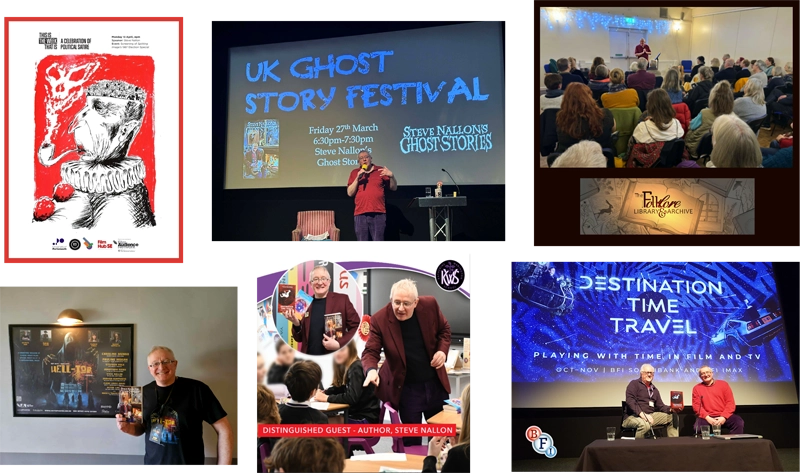
Presentations of Steve’s Ghost Story Talks are available for literary festivals, horror conventions, cultural societies, libraries, and creative workshops. They are also ideal for writing groups and retreats, film clubs, academic conferences, museums, schools and universities – and, of course, bookshops and signings. Each talk is tailored to the specific group or audience in consultation with organisers, and every event is supported by PowerPoint guides and illustrations.

Summary: Steve Nallon’s ‘The Strange and Haunting History of the Ghost Story – From Ancient Egypt to Modern Cinema’ talk explores the ghost tale, its history, themes, plots and characters, as well as its literary tradition and development, with special emphasis on the way supernatural stories across the eras have reflected society’s ever-changing cultural attitudes and concerns.
We begin with the rituals of age-old burial traditions and how they suggest a developing belief in a soul and afterlife. We then look at some early ghost tales, including the necromancer in the BOOK OF SAMUEL, Odysseus’s visit to the underworld in Homer’s ODYSSEY, a yarn in a letter of Pliny the Younger concerning a spectre rattling chains, and what’s believed to be the earliest written ghost tale, discovered on ancient Egyptian pottery.
Following on from this, there's the when, where, why and who of the ghost story: the ‘when’ being the times in the year ghosts are believed to be most active (Halloween, Christmas Eve); the ‘where’, the places ghosts are often encountered (crossroads, rivers, castles); the ‘why’, the reasons ghosts return from the dead (revenge, abduction, unfinished business); and the ‘who’, the fascinating range of spooks that populate the ghost tale (‘stranded’, ‘omen’, ‘siren’). The corporeal nature or otherwise of spectres is then discussed, including revenant, invisible and shadow ghosts. Traditionally, nervous women, people near to death, sexually ambiguous men, and animals such as dogs, cats and horses have all been thought to be the most receptive ghost seers, so they are also included in Steve’s presentation.
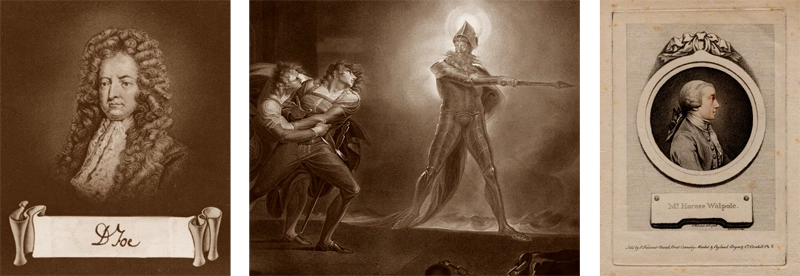
Next, the talk considers the role of ghosts in Elizabethan drama (Shakespeare’s HAMLET and MACBETH) and early prose fiction (Defoe’s THE APPARITION OF MRS VEAL). A key date in the development of the spook tale was the publication in 1764 of the Gothic romance THE CASTLE OF OTRANTO by Horace Walpole. Other sensationalist tales soon followed, leading us into the Golden Age of supernatural fiction during the Victorian and Edwardian eras.
The most prominent theme of the ghost tale is arguably the way the past impinges on the present, and the talk explores how this expresses itself in stories of grief and loneliness, but also as a quest for justice, reparation, and redemption. The talk considers as well the way the ghost story has been used to explore societal concerns and psychological insecurities.
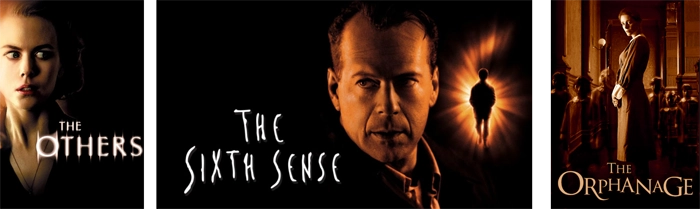
There’s then a look at the main exponents of the literary tradition, notably M.R. James, E.F. Benson, Sheridan Le Fanu, and more recently writers such as Shirley Jackson, Sarah Waters, and Stephen King. To bring us right up to date, we turn to ghost stories and hauntings in modern cinema (THE OTHERS, THE SIXTH SENSE, THE ORPHANAGE) and the recent explosion of supernatural tales on television (STRANGER THINGS, PENNY DREADFUL, AMERICAN HORROR STORY). The talk then asks, ‘Why this sudden popularity of otherworldliness, and what does it tell us about our predominantly secular age?’
Summary: Steve Nallon’s talk ‘The Gothic Story World: Exploring the Gothic Tradition and Its Legacy’ considers the rise of the Gothic, its settings, motifs, tropes, recurring character archetypes, themes, and philosophy. There’s also an exploration of its literary exponents and style, as well as its continuing legacy in modern-day popular culture.
The Age of Reason in the eighteenth century gave rise to a world where science and rationality began to take the place of mythology and superstition. Yet, this same era also saw the burgeoning of the supernatural Gothic in both literature and art. ‘Why so?’ asks the talk. Was it an emotional pushback against reason, the appeal of the sublime aesthetic of ‘delightful horror’ as set out by Edmund Burke, or simply that what appears unfathomable always leaves open the possibility of the supernatural? The talk explores these questions before moving on to consider the specific story tropes and characters of the Gothic tale, including ancestral curses, the persecuted heroine, incarceration, hauntings, revenge, dark secrets, dreams, madness, abusive male power, the stylistic use of heightened prose, coded language, and symbols. Here paintings by Goya, Blake, and Doré are offered as visual illustrations of Gothic iconography and the philosophy behind ‘The Sleep of Reason’. There’s also a look at the way Gothic architectural spaces became such an integral part of the Gothic narrative.

Both classic and modern tales are discussed, including Horace Walpole’s THE CASTLE OF OTRANTO, Robert Louis Stevenson’s THE STRANGE CASE OF DR JEKYLL AND MR HYDE, Angela Carter’s THE BLOODY CHAMBER, Susan Hill’s THE WOMAN IN BLACK, Edgar Allan Poe’s THE FALL OF THE HOUSE OF USHER, Bram Stoker’s DRACULA, Charlotte Brontë’s JANE EYRE, and Charles Dickens’s A CHRISTMAS CAROL and GREAT EXPECTATIONS. Other key Gothic writers who feature in Steve’s talk include Emily Brontë, Sheridan Le Fanu, Thomas Gray, Oscar Wilde, Matthew Lewis, Mary Shelley, Daphne du Maurier, Arthur Conan Doyle, M.R. James, Ann Radcliffe, Shirley Jackson, Stephenie Meyer, Patrick Ness, and Sarah Waters.
In the early twentieth century, the Gothic tradition has expanded its reach and now includes numerous subgenres across various forms and media. The talk considers the Fairy Tale Gothic (Guillermo del Toro’s movie PAN’S LABYRINTH); English Gothic (the classic horror movies of Hammer Studios); Gothic Romance (THE PHANTOM OF THE OPERA and LA BELLE ET LA BÊTE); Urban Gothic (DC Comics’ BATMAN); American Gothic (Orson Welles’s CITIZEN KANE, Stephen King’s THE SHINING); Southern Gothic (Toni Morrison’s BELOVED, Anne Rice’s INTERVIEW WITH THE VAMPIRE); Spoof Gothic (‘The New Yorker’ cartoon THE ADDAMS FAMILY and Richard O’Brien’s THE ROCKY HORROR SHOW); and the Gothic in opera and musical theatre (Béla Bartók’s opera BLUEBEARD’S CASTLE and Stephen Sondheim’s SWEENEY TODD). The presentation concludes by looking at how Gothic motifs and iconography are now embedded in popular culture, ranging from Goth fashion and lifestyle, to the design of the space vessel ‘Nostromo’ in the movie ALIEN, as well as its representation in SCOOBY-DOO cartoons, the HARRY POTTER novels and pretty much every Tim Burton movie.
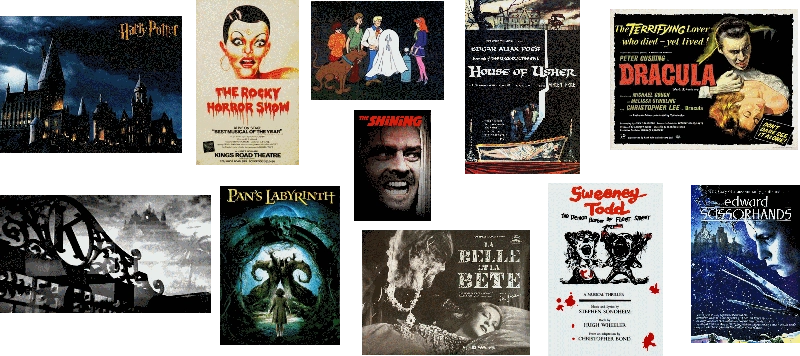

Here are some of the tropes, characters, plot scenarios, settings, themes, motifs, idioms, stylistic choices and literary techniques that you might associate with or expect to find in a Gothic tale across a variety of genres, forms and media: a creepy and furtive atmosphere; curses; a family secret; occultism; cobwebs and spiders; melancholia; weird and wondrous dreams; madness and hysteria; a dark nobleman or Byronic figure; vengeance; suspense and foreshadowing; a forbidden woman or femme fatale; egregious sin; hierarchical class structure; hidden treasure; werewolves; attics and cellars; word choices that emphasise guttural sounds and sibilance; psychological damage as a result of past trauma; evil murderers; graphic visceral violence; a beast half-human half-animal; masculine muscular strength; a damsel in distress or persecuted heroine; the power of the elements (fire, water, earth and air); inclement weather (storms, winds, lightning, fog, ice); locked doors; wine and beer barrels; a bedridden invalid; an enchanted mirror; startled and rearing horses; mummification; a haunted portrait; loss of rationality and the ‘sleep of reason’; a narrative framing device or story within a a story (for example, the finding of an old manuscript or the recounting of a life history); libido verses repression; strange creatures or monsters; Catholic iconography; garlic hanging from beams in taverns; coachmen who won’t go further than the crossroads; a full moon; a woman screaming; a woman fainting; sleepwalking; dungeons, chains and torture; decay; a subterranean world; armour, helmets, shields and heraldic flags; an east European setting; entrapment, imprisonment, and incarceration; use of symbolism; the burning of human flesh; isolation and seclusion; nervous innkeepers; stuffed animals with wide mouths and threatening teeth; science against the will of God; four-poster beds; candle light; masks and cloaks; devils, demons and goblins; hangings, executions, decapitations and dismemberment; whippings, lashings and bloody lacerations; morphine or opium habit; recovered memories; use widow’s weeds and black lace veils; visual juxtaposition of natural beauty with human depravity; immured nuns in convents; church bells; ropes and bondage; psychological manipulation intended to make another person doubt their memory or sanity (‘gaslighting’); sable black; exotic foreignness; medieval architecture, emblems and aesthetics; gravediggers; dreams that invade reality; a purifying fire; crooked trees and branches; piercing eyes; a claim the narrative is based on an authentic document; witchcraft; a bargain with the Devil; inebriety; folklore, superstition and pagan rites; hypnotism and mesmeric power over others; blind obsession; poisonings; a family in decline; interweaving of desire and dread; tyranny and despotic rule; injustice; decadent nobility and the trappings of extreme wealth; seduction, lust and sexual depravity; a ruinous landscape; a young pure-of-heart hero who loses his naive innocence; warnings and interdictions; jailers; ambiguous shadows; apparitions; death; a mute; physical deformity; capture and escape; ancient castles; grand guignol; flimsy nightdresses; human sacrifice; ghouls (flesh-eating creatures); gargoyles; nocturnal fears; schauerromantik (often called schauerroman or schauer-romantikpart meaning ‘dark romanticism’); voyeurism; tall and threatening towers; the uncovering of a past crime; susurrating leaves; birds of the Corvidae family, especially ravens, crows and jays; Carpathian mountains; ghosts; servants unwilling to intervene in wrongdoing; ancestral wickedness and the sins of the father; labyrinths, mazes and tunnels; a sense of a prior evil in a malevolent dwelling; the supernatural; fearful nightmares; omens; sublime terror; corpses and skeletons; red wine; smug aristocrats preying upon the weak; women as property; loners, recluses, outsiders and outcasts; morbidity; the discovery and awakening of sexual desire; churches and abbeys; graveyards, crypts and tombs; liminal places (marshes, caves, moors, rivers); gaunt, bloodless faces; ‘sublime terror’, the aesthetic sense of awe and insignificance when confronting the power and vastness of nature; ‘cosmic horror’, the sense of fear of an indifferent universe ruled by uncaring ancient entities; subjugation of the flesh; thresholds of transition (passageways, corridors, staircases, drawbridges); angry mob with pitchforks and shovels; transgression of sexuality, morality and the natural order; breakdown of boundaries and barriers (life:death, human:animal, reason:madness); a story set in the past; whores; bigotry; ‘resurrection men’ (grave and body snatchers); the narrative as allegory; good against evil; nudity; crumbling stonework and bricks; animal savagery (wild dogs, rats, snakes, bats); monks, priests and nuns; a ‘golem’, the creature of Jewish folklore made from clay; buildings of angular menace; sadism, cruelty, mockery and humiliation; the uncanny, the grotesque and the fantastic; burials, hearses and funerals; the literary use of the pathetic fallacy; eyes gorged out or pressed in with thumbs; owls hooting in trees; rape and incest; the ‘unknowable truth’, the horror that comes from discovering realities the human brain is not built to understand; sensationalism; a feeling of being frozen in time; inversions, doppelgängers, duality and visual echoes; expressionistic imagery... and the list could even go on.
Summary: Steve Nallon’s talk ‘A CHRISTMAS CAROL: Exploring Charles Dickens’s Classic Tale of Time’ looks at the novella’s fascinating history, delving into how this ‘Ghostly little book’, as Dickens called it, became such an immediate success and why it remains a beloved seasonal favourite to this day.
Dickens’s novella first arrived in Victorian bookshops in December 1843. The decade was known as ‘The Hungry Forties’, and so the talk begins with the historical context of a financial depression and the challenging social problems of the era. Each leading player of the tale is then considered, with particular focus on how visual imagery and metaphor give vitality to Dickens’s characters.
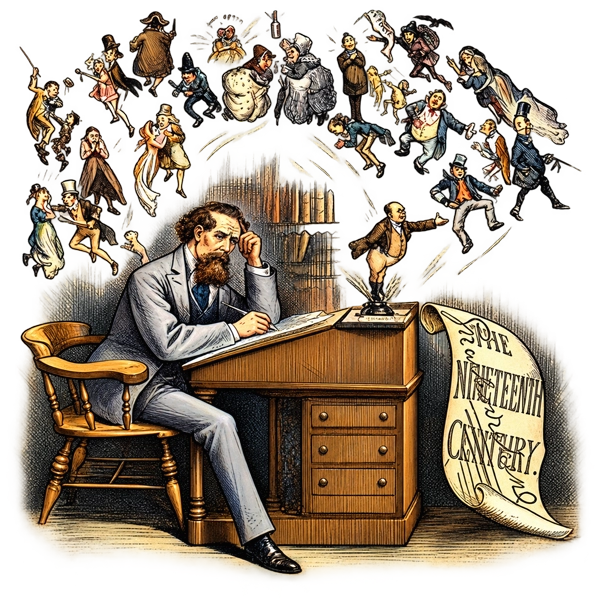
The talk next considers the key role of ‘fancy’ in how Scrooge must change his very way of thinking in order to become his new self. The presentation also explores the importance of memory and the nature of time as expressed in the narrative. Life as a prison is one of the underlying metaphors of A CHRISTMAS CAROL, so the talk examines how Dickens uses the concept of imprisonment in the story. There’s an examination, too, of the many Gothic motifs and tropes that feature in the tale. Dickens’s narrative style is sometimes described as ‘cinematic’. The talk explores what this means, offers examples, and puts forward the theory that many of the visual techniques that Dickens makes use of in his writing – such as suddenly jumping from one scene to another or the alteration in form and size of the spectres – come from his passion for magic lantern and phantasmagoria shows.
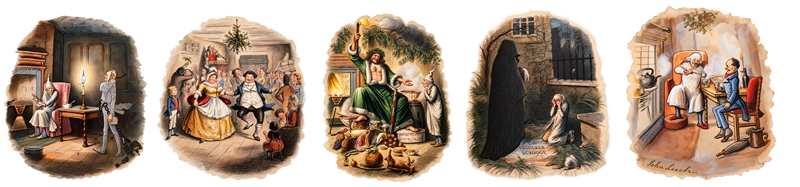
Dickens may not have been a church-going man, yet his social Christian ethics are reflected and embedded in his tale. The talk considers these, plus the narrative purpose of the many biblical references that can be found throughout the tale. The economics of A CHRISTMAS CAROL are also discussed, as are the specific theories of Thomas Malthus that were openly disparaged by Dickens in the story.
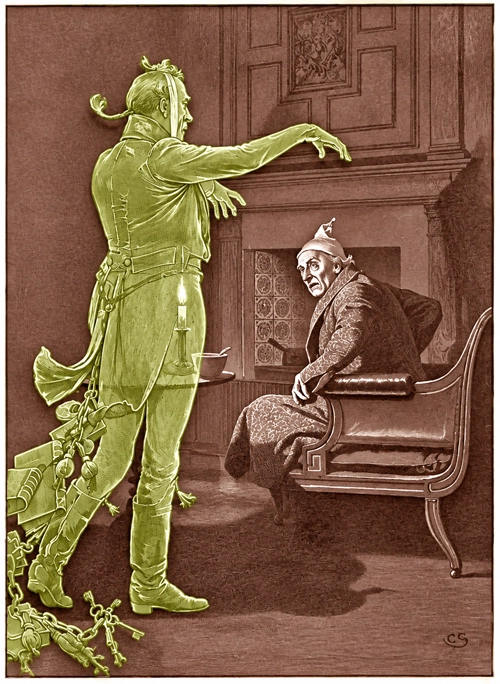
Of course, there have been many film and television adaptations of A CHRISTMAS CAROL. A highly regarded movie retelling is the 1951 classic starring Alastair Sim, which put its emphasis on the psychological damage experienced by Ebenezer in his youth. Other notable Scrooges include Albert Finney, Michael Caine, Seymour Hicks, Bill Murray, and Patrick Stewart. Each interpretation illustrates how retellings often reflect the concerns of the times in which they were made. For example, the 1984 Reagan-era version, with George C. Scott, makes the focus of Scrooge’s change of heart the witnessing of desperate social conditions rather than his lonely and unhappy childhood.

Supernatural storytelling in winter has ancient folklore roots, but it is fair to say that Dickens popularised the annual Christmas tale for the growing urban readership of his day. Steve’s talk, therefore includes a look at some of Dickens’s other Yuletide stories, and indeed the whole tradition of the ghost story at Christmas.
The aim is to inspire as well as inform, and so if people attending Steve’s presentation have a better understanding of what Scrooge means when he says, "I will live in the Past, Present, and the Future. The Spirits of all Three shall strive within me" then the central purpose of the talk will have been achieved. And as Tiny Tim said, “God Bless Us, Every One!”
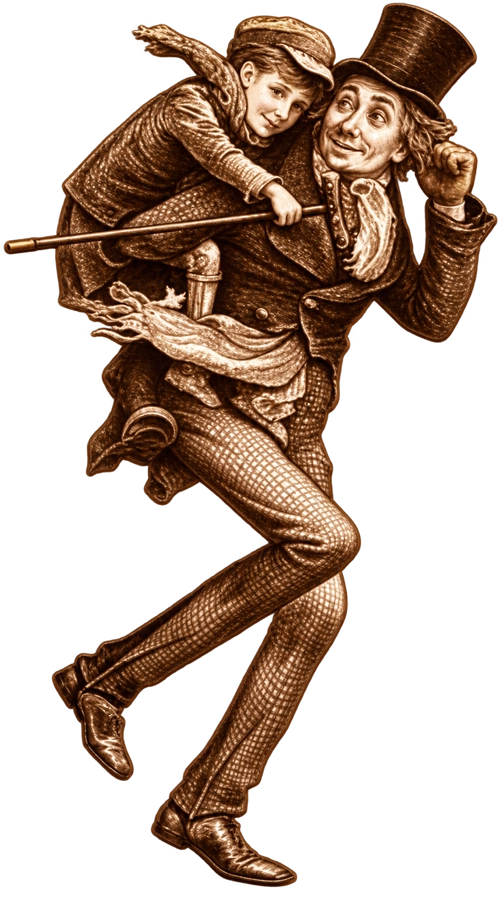

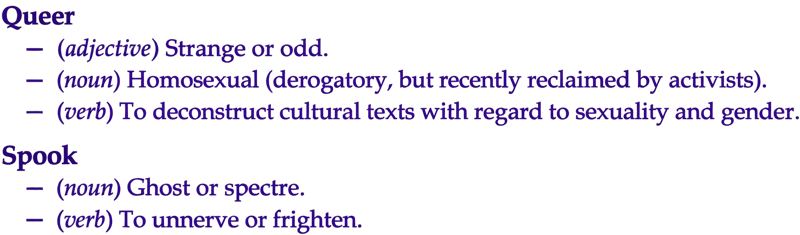
Summary: Shamans and mystics across history have often been associated with those who are said to be of ‘two-spirits’ – in other words, people who do not conform to strict definitions of sexual and gender identities. Steve Nallon’s talk ‘The Very Queer World of the Spook Tale (and Those Who Tell It)’ explores this supposed connection and develops the idea by looking at the transgressive nature of ghost tales and the people who write them.
The talk begins with the age-old belief that certain types of people are especially attuned to seeing ghosts – namely, the recently bereaved, children, those close to death, the mentally unbalanced, giddy and nervous women, and sexually ambiguous men. That it’s ‘the queer’ who is sensitive to the presence of ghosts goes way back to Reginald Scot’s THE DISCOVERY OF WITCHCRAFT (1584), where witchcraft is directly associated with “women and effeminate men”, and where the seeing of spirits proceeds “from a cowardly nature and complexion, or from an effeminate and fond bringing up.” The talk therefore asks, ‘What is at the heart of this supposed symbiotic connection, and does it stretch to the writing of a spook tale?’
Applying today’s sexual categories to folk long dead is a contentious issue. That said, there have been numerous writers over the centuries who did not conform to sexual norms – and many penned unnerving tales and yarns. And it’s in this context that the talk considers the lives and works of Horace Walpole (THE CASTLE OF OTRANTO), Mary Shelley (FRANKENSTEIN), Matthew Lewis (THE MONK), John Polidori (THE VAMPYRE), Oscar Wilde (A PICTURE OF DORIAN GRAY), Henry James (THE TURN OF THE SCREW), M.R. James (GHOST STORIES OF AN ANTIQUARY), and E.F. Benson (NIGHT TERRORS), as well as more contemporary authors such as Sarah Waters (THE LITTLE STRANGER) and Shirley Jackson (THE HAUNTING OF HILL HOUSE). To bring us right up to date, there is a review of some of the queer supernatural tales that one can find in modern cinema, including ALL OF US STRANGERS, THE SERPENT’S SKIN, I SAW THE TV GLOW, JENNIFER’S BODY, TEENAGE SEX AND DEATH AT CAMP MIASMA, MARRY MY DEAD BODY, HELLRAISER, and LEVITICUS, not forgetting the plethora of lesbian vampire movies from the Hammer era to the current day.

Whenever discussing supernatural stories, there’s always the puzzle of why people pay to be frightened out of their wits in the first place. This raises the issue of the psychology of horror, and, moving on from that, the question: ‘Why do strange tales often attract a queer audience?’ Is it sympathy for the outsider, the transgressional thrill of horror, a sense of otherness, or simply the glories of excess and high camp?
The talk concludes by inviting those present to share their favourite spooky queer tales. My own are E.F. Benson’s THE MAN WHO WENT TOO FAR, James Whale’s movie BRIDE OF FRANKENSTEIN, and the now classic A NIGHTMARE ON ELM STREET II: FREDDY’S REVENGE.
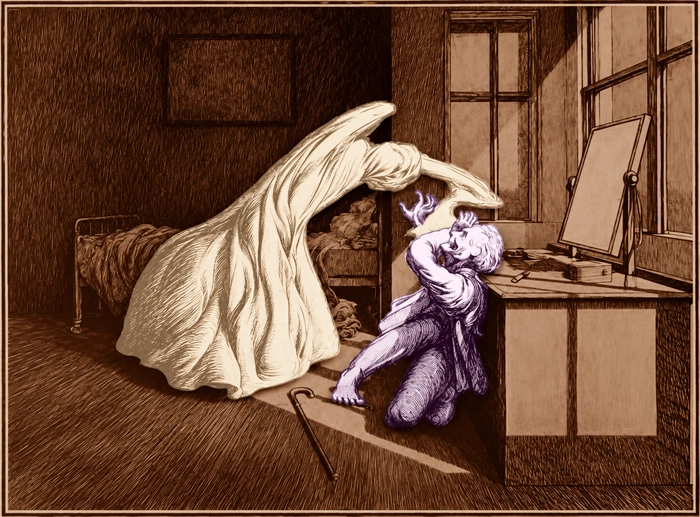

Summary: Steve Nallon’s talk ‘The Haunted House Movie’ considers the origins of the genre, its tropes, motifs, cinematic techniques, scenarios, and recurring archetypes, particularly matriarchal and patriarchal figures.
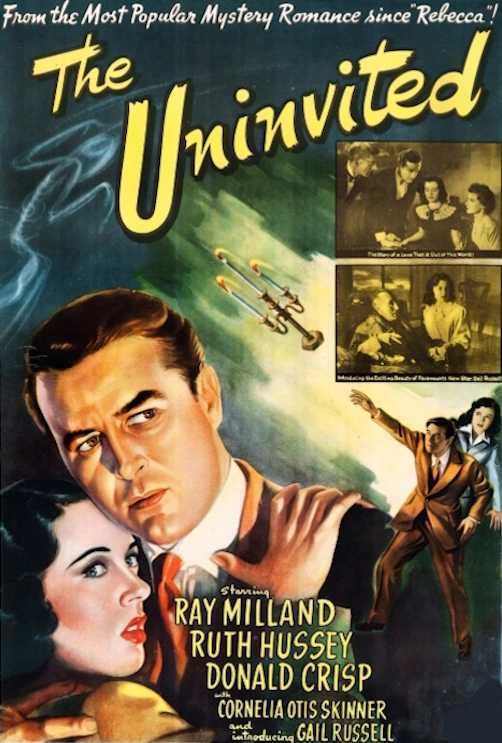
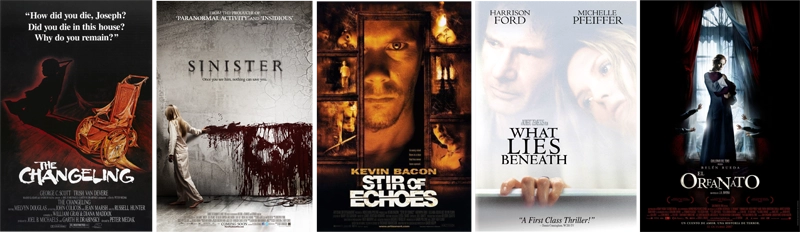
Steve’s talk on the haunted house movie, with THE CHANGELING (1980) as the focal example, considers the origins of the haunted house genre and what is often its central plot action – namely, an investigation into a past crime as a result of some sort of supernatural manifestation that is now impinging on the present. And that key narrative drive is there, for example, in THE UNINVITED, a seminal haunted house movie released in 1944. In fact, THE UNINVITED has many of the tropes and story beats now familiar to the genre, such as warnings not to buy the house, local gossips who provide the exposition, supernatural possession, the servant who takes a dislike to the house, and the inevitable séance scene. As well as these, there are visual and sensory moments, such as the coming on of an eerie coldness or strange smell, a hissing cat, candles being blown out, and the ubiquitous nearby old and creepy tree. And in the talk, Steve illustrates how these story beats and visual images can be traced through such movies as THE CHANGELING (1980), SINISTER (2012), EL ORFANATO (released as THE ORPHANAGE in 2007), STIR OF ECHOES (1999), WHAT LIES BENEATH (2000), and many more.
The talk acknowledges that there are creepy house movies that don’t fit the back story crime investigation scenario, plus ghost movies that better fit into a comedy or romance genre, rather than mystery tales. It should be stated, too, that there are many movies where hauntings don’t take place in houses as such, but rather in hotels, schools, or ships. That said, some of these movies do involve a family in a domestic setting and so perhaps our definition of what is meant by a ‘haunted house’ should be more open and flexible. And it’s with this in mind that the article sets out to explore the haunted house movie genre – beginning with the nature of the house itself.
Haunted houses come in many shapes and sizes, as do their grounds and surroundings. Additionally, there’s how everything is shot and presented cinematically. Within the house itself, there are various rooms and spaces – notably attics, staircases, corridors, cellars, and bathrooms – that are key from a haunting perspective. Here, the article identifies the specific dramatic functions each plays in a haunted house story. Following this, Steve’s talk considers the concept of the genius loci and the idea that the dwelling itself is a malevolent magnetic force or is possessed by needful spirits. Such spaces seem to worm their way into the minds of those who stay there, and so it’s in this context that the talk considers in depth the psychological aspect of the haunted house movie. Arguably, though, the most important aspect of any haunted house is that it is a haunted home, for a major theme of the genre is the family under threat and the protection of children. And it’s with this in mind that the article moves on to consider the resident hauntees.
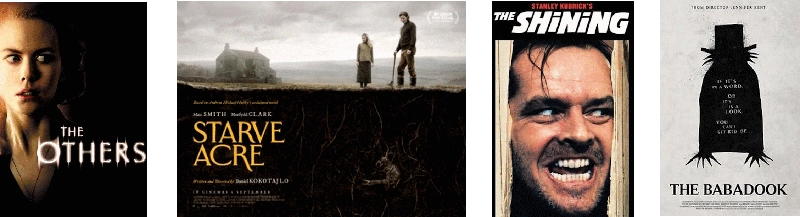
Steve’s lecture argues that the maternal figure tends to be the most protective and watchful character (for example, THE ORPHANAGE, STARVE ACRE, GHOSTWATCH, THE BABADOOK, THE INNOCENTS, THE CONJURING), whereas the paternal figure is often a disruptive force, especially if he is experiencing a loss of status or a sense of failure. The prototype here is, of course, Jack Torrance (Jack Nicholson) in THE SHINING (1980), but the talk also looks at the father figures in THE AMITYVILLE HORROR, SINISTER, BURNT OFFERINGS, STIR OF ECHOES, and 1408.
Next, there’s the crucial role that children play in haunted house tales. A classic trope is that it’s often the child who is the only one at first who can see the ghost, though this is usually dismissed by the parents as an overactive imagination. To the child, the supernatural manifestation may seem innocent enough, but its motive often becomes more sinister, and some sort of abduction results. That’s when the family crisis really kicks in.
In tandem with all this, there is often an investigation into a past crime that creates a rupture within the family. And it’s the injustice of the crime that usually drives whatever it is from the past that is impinging on the present. The talk argues that it is these aspects of such narratives, as well as the shocks and startles, that make the haunted house scenario such an enduring and fascinating genre.
The talk then moves on to consider the story craft of the haunted movie. Steve suggests that a supernatural tale can be as speculative and imaginative as the screenwriter wishes, but it must work within its own logic and limitations. Furthermore, the writer and director are free to make use of any story trope going, but conventions ideally should be reinvented in some new way. Another basic point is that the actions and choices of the characters should be as realistic as possible to human behaviour. Related to the credibility issue is keeping the tale as pacey as possible, so that the audience doesn’t have too much thinking time to question the whys and wherefores. It’s important, too, that protagonists are given agency, or at least made to strive for answers, for that’s what delivers forward motion to any drama. With these basic pointers established, the discussion shifts to the more specific aspects of story craft in the haunted house movie genre.
The concept of unity of place is examined, particularly in relation to boundaries and the pressure-cooker atmosphere of a confined space. Unity of time is also considered with regard to a movie’s potential use of ‘real time’ (where events unfold in continuity with the movie’s runtime) and ‘non-linear time’ (where time and events are fractured). Examples are offered for each. The importance of a specific time of day (or night) for manifestations is discussed, as is the dramatic value of time deadlines.
Of course, writers can base their haunted house tales on established story frameworks, and so there’s a detailed look at the use of the Gothic tale structure in the movie AND NOW THE SCREAMING STARTS, based on the novel FENGRIFFEN by David Case. There are also those tales where the kernel of the story originates from a real life experience, and it’s in this context that the talk considers David Lowery’s A GHOST STORY and Ari Aster’s HEREDITARY, plus those movies which, in some way or other, make use of childhood angst.
The talk next looks at some of the established story tropes associated with the haunted house genre, including the interdiction warning; the recent trauma or tragedy that has enabled a character to become a ghost seer; the early, strange but explainable incident that makes the protagonist uneasy; an injury of some sort; reluctant or barking dogs; noises blamed on old pipes; sleepwalking; a dream sequence where the real and the unreal blur; recovered memories; a savant character who explains the supernatural phenomenon; the sudden appearance of creepy-crawlies; a séance or Ouija board session; possession by a ghost or supernatural entity; decapitations; a cleansing climactic fire; and a coda that suggests a supernatural presence still remains. Then there are visual, sensory and sound tropes, such as shaking chandeliers; pensive hands on doorknobs or handles; doors or windows that open and close by themselves; strange smells or unusual stains; and that musical instrument which plays itself, usually a piano. Specific examples of these story tropes and incidents are offered throughout this section of the talk.
A story craft device that’s found in pretty much every scary movie is the false alarm or false scare, or the ‘Lewton Bus’ as it’s known to pretty much every horror fan. The talk looks at a variety of false scare techniques and the way filmmakers are constantly striving to be as inventive as possible in order to avoid the cliché of the ‘cat scare’. There is as well in this section of Steve’s talk an analysis of the ‘jeopardy set-up scene’ – which usually occurs early in the movie – plus what contemporary filmmakers refer to as the ‘foreplay scare’, which is the scare that often begins the climactic action.
This leads on to the next section of the talk, and that is the cinematic techniques of the haunted house movie. To start off, there’s a detailed look at the use of lighting and shadows, the creature silhouette, plus light sources and contrasts – especially ‘chiaroscuro’ lighting. Following on from this, there’s an examination of camera placement and movement, camera angles, the use of the ‘Dutch tilt’ and the camera effect known as the ‘trombone shot’. Then, the presentation looks at the visual composition of the image itself within the frame and how it is photographed. Here, the talk considers the ‘rule of thirds’, ‘lead room’, the use of negative space, unnatural symmetry and stillness at the ‘vanishing point’, and deep focus photography.
The talk then moves on to consider what you might call the ‘camera’s eye’, meaning whether what we are seeing is objective or subjective (point of view or POV) or even what’s known as ‘ambiguous camera’. Linked to these are ‘inference edits’, where the viewer is left to decide exactly what the connection is between certain shots. There’s also a look at the history of subliminal editing in spooky movies. Following on from this, the talk considers the use of different types of lenses, plus what it is possible to do with the film itself in post-production.
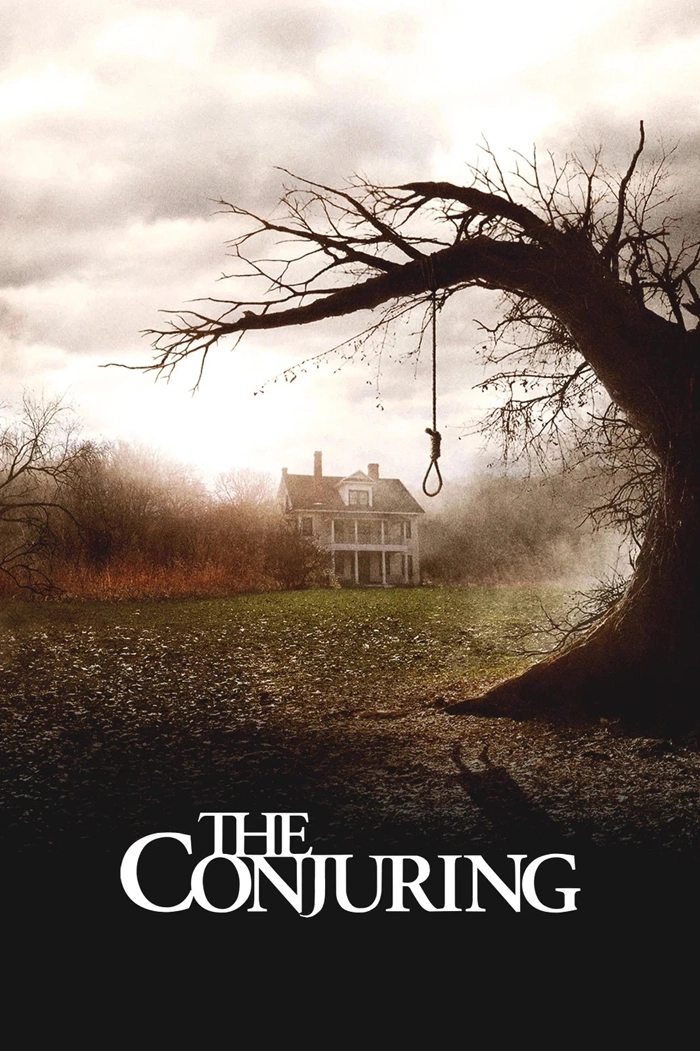
Another important visual aspect of any haunted house movie is how a ghost is represented on screen. Steve’s talk, therefore, looks at how different film makers have achieved this and the way it links to the narrative theme of the tale. In storytelling, there is of course the well-known adage ‘Show, Don’t Tell’, but often the portrayal of the physical nature of the ghostly presence in haunted house movies is more ‘Suggest, Don’t Show’, especially in psychological horror. And so here, the lecture examines the various cinematic techniques available to filmmakers to achieve this sense of suggestion.
The importance of sound in a haunted house movie shouldn’t be underrated, because images don’t just come from what you see, but also what you think is there from what you hear. This section of Steve’s lecture considers audio levels, ‘infrasound’ or ‘black noise’, the sound design technique known as ‘hyper-Foley’, plus the musical soundtrack and the use of popular songs.
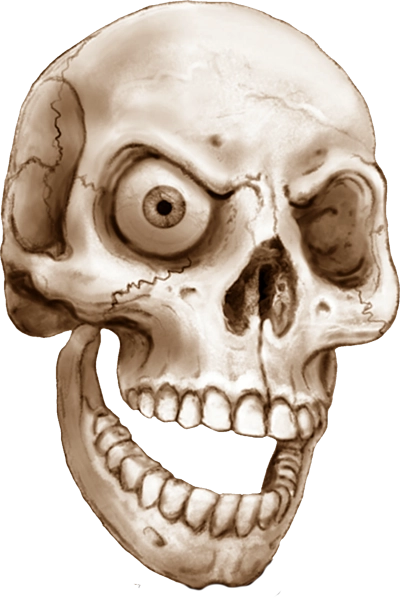
Two visual motifs that movie directors are very fond of are reflections in a mirror or water and the frame-within-the-frame. The re-adjustment of that inner frame, especially when it is a mirror that reveals something previously unseen, often causes a shock reaction. This brings us to the question of the ‘jump-scare’ (or ‘startle reflex’, to use the term coined by psychologists). The talk considers the structure of the jump-scare and its similarity to comedy. Following on from this, there’s a detailed analysis of some of the shockers that James Wan uses in THE CONJURING and how they work. The key point with all these instances is how James Wan is very careful in varying the scare techniques and spreading them evenly through the movie. Of course, film makers have a huge array of frighteners in their jump-scare arsenal and the lecture continues with a look at characters unexpectedly crossing the frame, the leap towards camera that engulfs the frame, a snap blackout or sudden loss of light, and many more.
Much of the section on the cinematic techniques of the haunted house movie is concerned with what you might call cinematic style, which here is defined as the manner in which a movie maker expresses their distinct creative vision through mood, tone, and pace, with the aim of shaping how an audience will experience the story as it’s being presented. But can a movie have too much style? Being distinct is fine, but critics and detractors have argued that for some directors style often takes precedence over substance and that their movies become ‘showy’ or that their films may work well enough as mechanical frighteners but are ultimately clinical and emotionally vacuous. The lecture argues that it’s a matter of balance. It is always worth repeating the old adage, ‘It’s not about the shot, but what the shot’s about.’ In other words, cinematic style and technique are pointless if their purpose doesn’t serve the narrative.

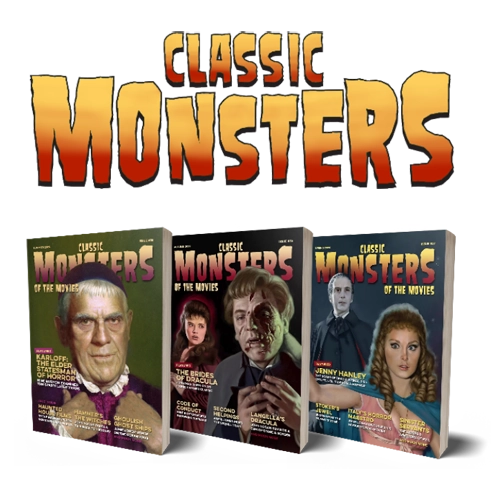
Steve Nallon’s talk on the haunted house movie genre is based on articles written for the award winning magazine CLASSIC MONSTERS OF THE MOVIES.
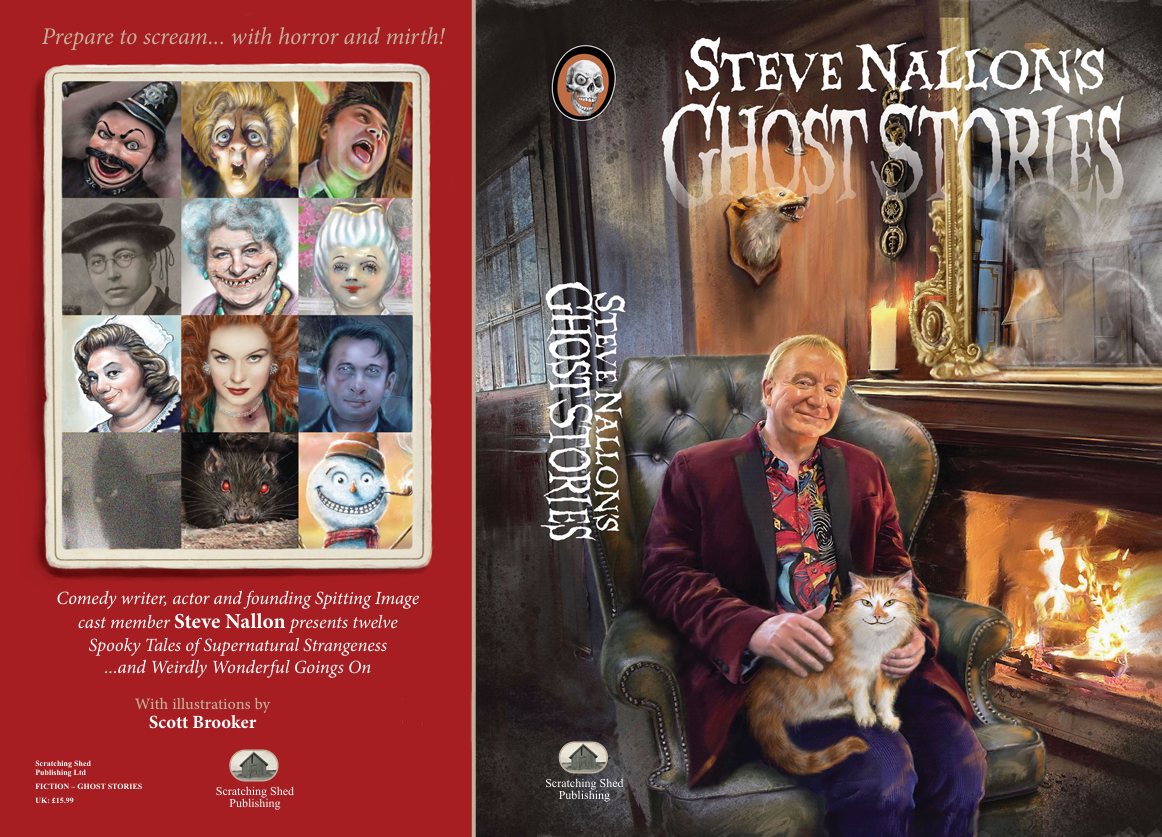
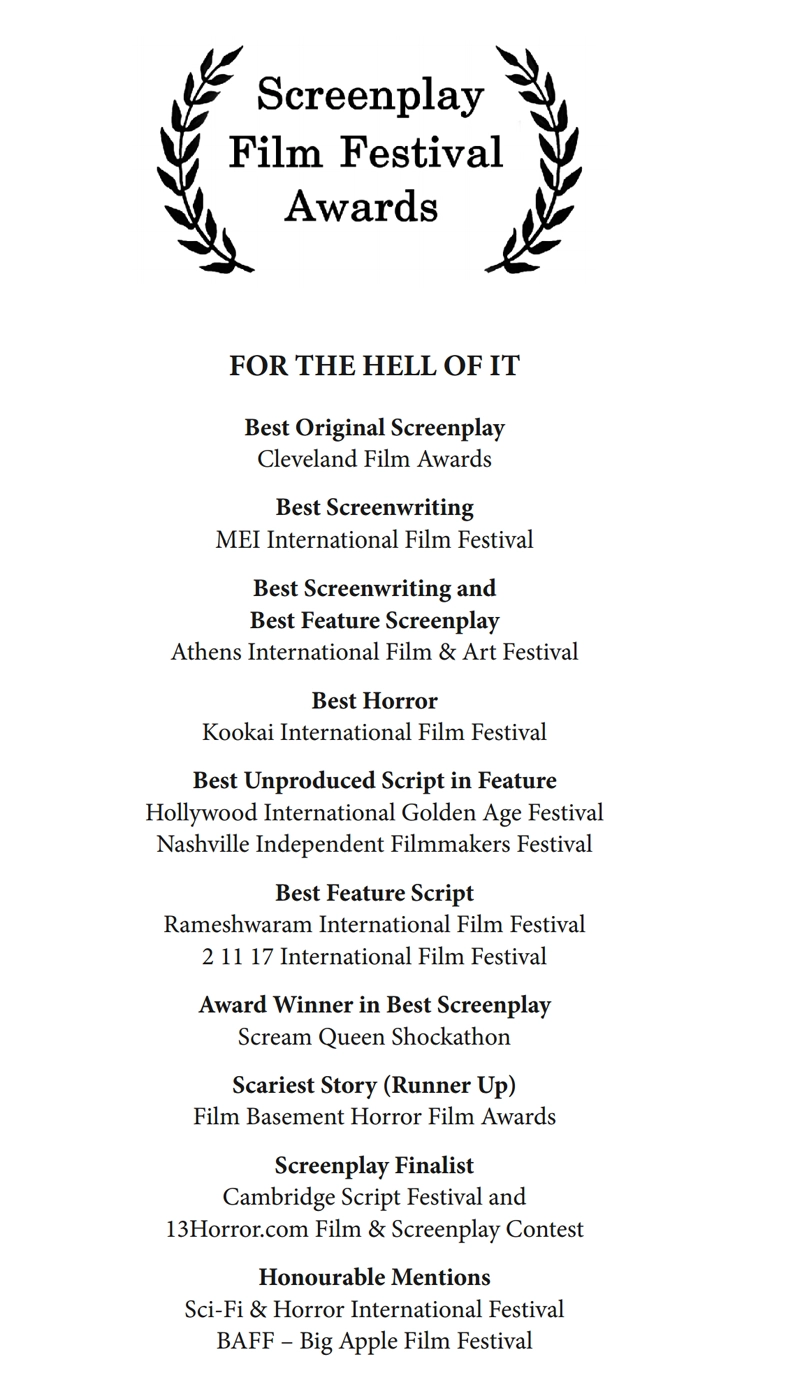
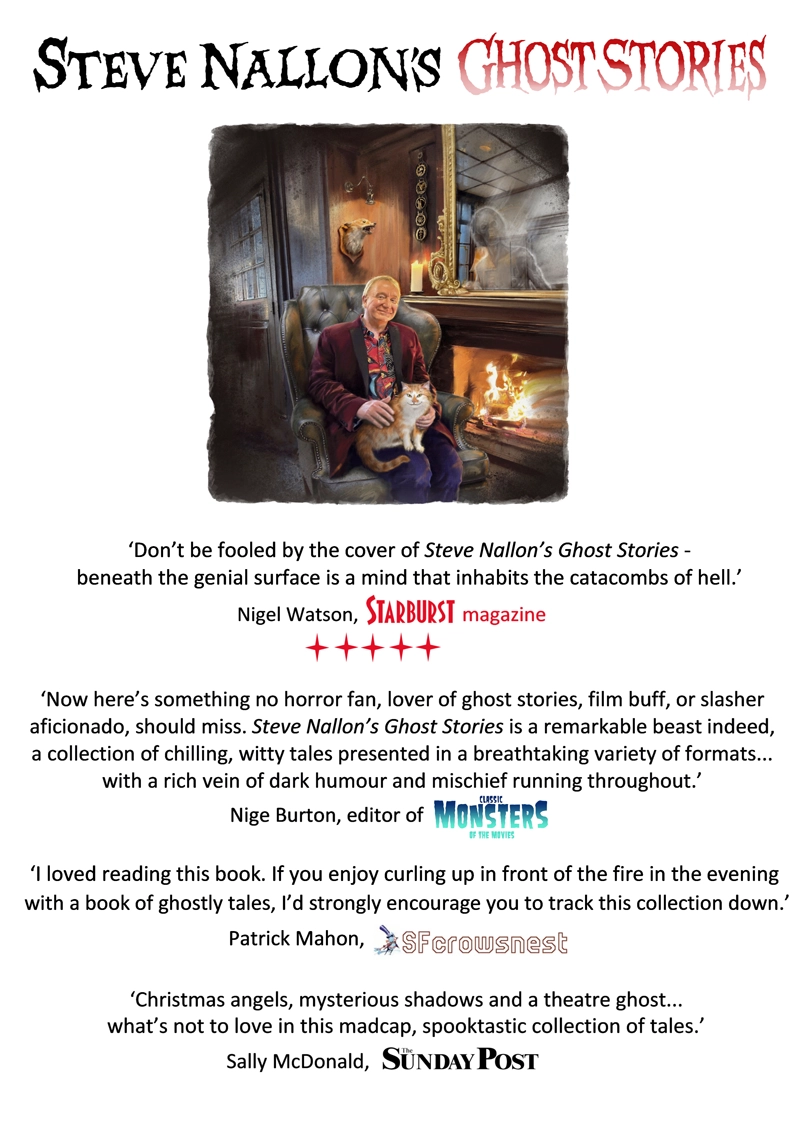
Steve’s collection of supernatural tales, STEVE NALLON’S GHOST STORIES, published in 2024, includes a story called ‘I Was Once a Haunted House’. The tale, narrated by the house itself, makes use of many of the tropes of the haunted house genre. The collection received rave reviews, and one of the tales, ‘For the Hell of It’, written as a screenplay, won a multitude of awards in various film festivals.