For the ghost story a slight haze of distance is desirable. ‘Thirty years ago,’ ‘Not long before the war,’ are very proper openings.
M.R. James, from the Introduction to the V.H. Collins edition Ghosts and Marvels (1924)
Setting – Time
The Gothic tradition of the ghost story was that it should be set in the past. ‘Thirty years ago’ is the phrase which begins the tale told in Sheridan Le Fanu’s The Haunted House in Westminster (1872) and perhaps this is what M.R. James was thinking of with his ‘thirty years ago’ observation in his introduction to Ghosts and Marvels. James goes on the say that “on the whole (though not a few instances might be quoted against me) I think that a setting so modern that the ordinary reader can judge of its naturalness for himself is preferable to anything antique.” James’ point is “to allow the reader to identify himself with the patient” and that the reader of a tale set too far in the past falls “into the positions of the mere spectator.”
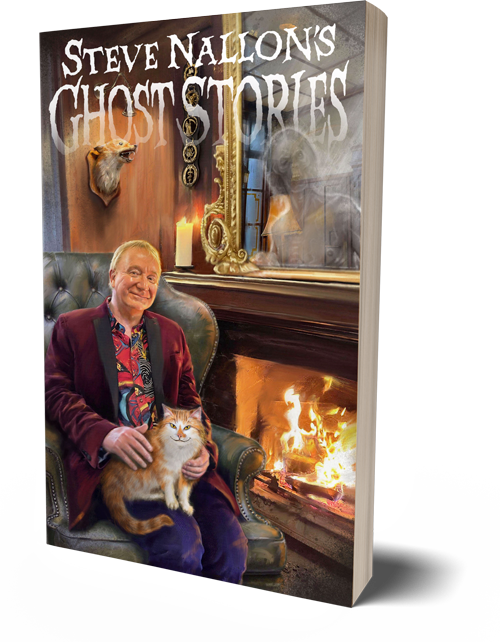
But even in his own work there’s no hard and fast rule. Some of his tales are set in the past, often with the date stated in the first paragraph – 1883 in the case of Canon Alberic’s Scrapbook (written between 1892 and 1893), 1811 in Lost Hearts (also written between 1892 and 1893) and as far back as 1730 in The Residence at Whitminster (first published in 1919). Others such as ‘Oh, Whistle, and I’ll Come to You, My Lad’, Casting the Runes and A View from a Hill have what appear to be contemporary settings. My M.R. James homage, The Portrait of a Looking-Glass, follows the ‘thirty years ago’ advice, for those are the first words of the story. That said, the actual writing of the tale, which is a tale in itself, is happening right in the here and now of the narrator.
Charles Dickens understood the need to identify ‘with the patient’, as M.R. James has it, and that’s perhaps why he set his 1843 A Christmas Carol in the contemporary world, known as ‘The Hungry Forties’, reflecting the dire economic situation of the period. And as one of the charity collectors says, Christmas time is chosen “because it is a time, of all others, when Want is keenly felt, and Abundance rejoices.” Christmas Eve is also the night before a religious festival and that’s when ghosts were thought to be most active and, since it’s the anniversary of Marley’s death seven years previously, it’s the perfect night for a ghostly visitation. Dickens didn’t invent the ghost story at Christmas but A Christmas Carol certainly set a trend. Outside the snow is falling, but within all sit gathered around a blazing fire waiting for the tale to commence… Marley was dead: to begin with… oh, and what a great opening line, because you know from the start that this Marley guy won’t be staying dead for long…
You could fill a book with the titles of Christmas ghost stories alone, but a few I would recommend, some funny and charming, others menacing and deadly, are John Kendrick Bang’s The Water Ghost of Harrowby Hall (1920), Rosemary Timperley’s A Christmas Meeting (1951), Bithia Mary Crocker’s Number Ninety (1895), H.R. Wakefield’s Lucky’s Grove (1940), Charlotte Riddell’s A Strange Christmas Game (1868) and Frank R. Stockton’s tender tale Old Applejoy’s Ghost (1900).
Aside from Christmas Eve there is another evening in the year when ghosts are thought to enjoy a good night out and that is the eve of All Saints, or Halloween and you’ll find examples in Mrs Henry Wood’s Reality or Delusion (1868) and Edith Nesbit’s Man-size in Marble (1887), though it’s the eve of All Souls in George MacDonald’s Uncle Cornelius His Story (1869).
New Year’s Eve is the night where life and its transitional nature is thrown into sharp focus. In storytelling, New Year’s Eve often functions either as a deadline or as a marker of psychological change. Movies especially use New Year celebrations as a backdrop because of the contrast it offers between those who are enjoying the party and those who are miserable. There are fewer ghost tales set at New Year than Christmas, but two of note are E.F. Benson’s redemptive tale How Fear Departed From the Long Gallery (1911) and H.R. Wakefield’s ‘Look Up There!’, which features Gauntry, a house where no one is supposed to have spent the night of New Year’s Eve for three hundred years. It’s also perhaps worth mentioning a movie called Repeat Performance (1947), where Sheila Page kills her husband on New Year’s Eve, but then wishes she could relive 1946 and so avoid the mistakes that led to his death. Not exactly a ghost story in the traditional sense but it does have a supernatural element of sorts.
As well as Halloween, Christmas and New Year, there are of course those tales where people just happen to turn up on the night where the dead return, as in Robert Aickman’s Ringing the Changes, where a young couple arrive in Holihaven on the night when the ringing of bells summons the dead to dance with the living. And a real spook fest it is!